The longevity and beauty of your wooden cutting boards hinge significantly on proper maintenance, especially consistent oiling. For home cooks and culinary professionals alike, ensuring these essential kitchen tools remain hydrated and protected from daily wear and tear is paramount. Two prominent options dominate the discussion for wood care: food-grade mineral oil and John Boos Mystery Oil. While both serve the crucial purpose of nourishing wood, they offer distinct advantages and formulations that cater to different needs. Understanding these differences will empower you to make an informed choice, safeguarding your investment and keeping your wooden boards in prime condition for years to come.
Understanding Wooden Cutting Boards and Their Maintenance Needs
Wooden cutting boards are cherished in kitchens worldwide for their aesthetic appeal, knife-friendly surface, and natural antimicrobial properties. However, wood is a natural material that requires diligent care to prevent it from drying out, cracking, warping, and absorbing unwanted moisture or odors.
Left untreated, wood can become brittle, leading to unsightly cracks and splits that compromise its structural integrity and create crevices where bacteria can thrive. Oiling a cutting board is not merely about aesthetics; it’s a vital preventative measure that deeply hydrates the wood fibers, forms a protective barrier against moisture, and helps maintain its natural resilience. This process ensures your board remains hygienic, durable, and a reliable partner in your culinary endeavors.
Food-Grade Mineral Oil: The Foundation of Wood Protection
For many years, food-grade mineral oil has been the go-to solution for conditioning wooden kitchen items. It’s a simple, effective, and widely available product that forms the basis of many specialized wood care formulations.
What is Mineral Oil?
Table is empty.Food-grade mineral oil, sometimes called liquid paraffin, is a non-toxic, non-drying product derived from petroleum. It is colorless, odorless, and flavorless, making it an ideal choice for surfaces that come into contact with food. Unlike many cooking oils, mineral oil is shelf-stable and will not go rancid over time, ensuring your cutting board remains free from unpleasant smells or tastes.
Benefits of Mineral Oil for Cutting Boards
The primary benefit of mineral oil is its ability to deeply penetrate wood fibers, keeping them moisturized from within. This internal hydration is crucial for preventing the wood from drying out, which is the leading cause of cracking, warping, and splitting. By saturating the wood, mineral oil creates a water-repellent barrier, significantly reducing the absorption of liquids and minimizing the risk of stains and bacterial growth. Its inert nature means it won’t react with food or impart any unwanted flavors, making it a safe and dependable choice for daily maintenance.
Limitations of Pure Mineral Oil
While pure mineral oil is excellent for hydration, its protective qualities primarily focus on the interior of the wood. It doesn’t offer the same external sealing properties that wax-infused products do. This means that a board treated solely with mineral oil might require more frequent applications to maintain a strong surface barrier against moisture and stains, especially with heavy use or frequent washing.
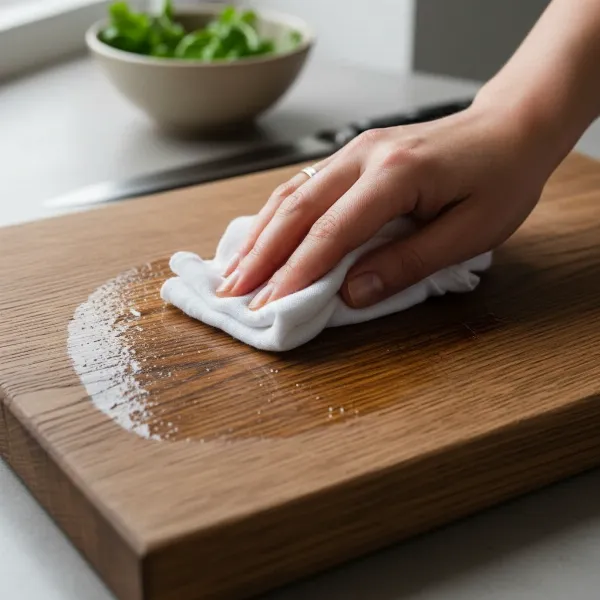 A close-up of a hand applying food-grade mineral oil to a wooden cutting board, showing the wood absorbing the oil for hydration and protection.
Boos Block Mystery Oil: An Enhanced Approach
Stepping up from basic mineral oil, Boos Block Mystery Oil offers a specialized blend designed to provide comprehensive care for wooden cutting boards and butcher blocks. It’s formulated by John Boos & Co., a renowned name in the industry, and aims to offer superior protection and rejuvenation.
What is Boos Block Mystery Oil?
Boos Block Mystery Oil is a carefully crafted blend that combines refined food-grade mineral oil with natural waxes, primarily carnauba wax and beeswax. Some formulations also mention naturally anti-microbial oils and waxes. This proprietary mixture is NSF certified, ensuring its safety for all food preparation surfaces. The inclusion of waxes distinguishes it from pure mineral oil, providing an added layer of defense.
Key Advantages of Mystery Oil
The unique blend in Mystery Oil offers several advantages. The mineral oil component deeply penetrates the wood, hydrating it and preventing dryness, just like pure mineral oil. However, the added carnauba wax and beeswax work to create a more robust, semi-permeable seal on the wood’s surface. This enhanced barrier offers superior protection against moisture, stains, and the ingress of bacteria. The waxes also help to revitalize and emphasize the wood’s natural grain and color, leaving a richer, more vibrant appearance. This deeper penetration and sealing capability translate to more lasting protection and a more aesthetically pleasing finish compared to using mineral oil alone.
When to Use Mystery Oil
Boos Block Mystery Oil is ideal for regular, thorough maintenance of all wooden cutting boards and butcher blocks, particularly those from the John Boos brand. It’s recommended when your board appears dry, lighter in color, or when water no longer beads on the surface. For new boards, an initial generous application followed by regular conditioning is crucial to establish a strong protective foundation. It’s often used in conjunction with Boos Block Board Cream, which provides an even thicker wax layer for sealing after the oil has fully penetrated.
Boos Block Mystery Oil vs. Mineral Oil: A Detailed Comparison
When it comes to choosing between Boos Block Mystery Oil and standard food-grade mineral oil, understanding their core differences and how they perform is key. Both are vital for wood care, but they serve slightly different functions and offer varying levels of protection.
| Feature | Food-Grade Mineral Oil | Boos Block Mystery Oil |
|---|---|---|
| Composition | 100% refined food-grade mineral oil | Blend of food-grade mineral oil, carnauba wax, and beeswax (and sometimes other natural oils/waxes) |
| Primary Function | Deep hydration, prevents drying and cracking | Deep hydration, enhanced sealing, and surface protection |
| Protection Level | Good internal hydration and moisture resistance | Superior internal hydration with robust external sealing and anti-microbial properties |
| Viscosity | Lighter, thinner consistency | Slightly thicker due to wax content |
| Application | Penetrates quickly, good for frequent conditioning | Penetrates deeply, waxes provide a more durable surface barrier |
| Finish | Natural, subtle sheen | Richer, more vibrant look, enhanced sheen from waxes |
| Cost | Generally more affordable | Typically higher due to specialized blend and brand |
| Longevity | May require more frequent reapplication of oil for barrier | Waxes help maintain protection longer, reducing reapplication frequency of wax |
Essentially, pure mineral oil acts as a fundamental moisturizer for your wood, preventing it from drying out and becoming brittle. Boos Block Mystery Oil takes this a step further by adding natural waxes that not only hydrate but also create a more resilient surface barrier. This barrier helps to repel water more effectively, enhance the wood’s natural beauty, and offer extended protection against moisture and microbial intrusion. While mineral oil is an excellent standalone product, Mystery Oil provides an “all-in-one” approach for deeper conditioning and a more durable finish.
Choosing the Right Oil for Your Wooden Cutting Board
Selecting the ideal oil for your cutting board involves considering several factors related to your board’s type, your usage habits, and your desired level of maintenance. There’s no single “best” option, but rather the best choice for your specific situation.
Consider Your Board Type
Different wooden items might benefit from different treatments. For instance, a solid, thick butcher block might thrive with the deeper penetration and robust sealing offered by a wax-infused blend like Mystery Oil, especially given its larger surface area and potential for heavy use. For thinner, everyday cutting boards, food-grade mineral oil can be perfectly adequate for regular hydration. If you own John Boos products, their Mystery Oil and Board Cream are specifically designed to work optimally with their wood.
Frequency of Use and Maintenance Habits
How often do you use and wash your cutting board? A board used daily and washed frequently will dry out faster and require more regular conditioning. In such cases, the added protection of Mystery Oil can extend the time between full re-waxing applications, though mineral oil is still excellent for frequent top-ups. If your board sees occasional use, a less intensive regimen with mineral oil might suffice, followed by a wax balm application less often.
Desired Level of Protection and Finish
Do you prioritize maximum protection against moisture and a rich, lustrous finish? Then Boos Block Mystery Oil, with its blend of mineral oil and waxes, will likely be your preferred choice. The waxes contribute to a more pronounced sheen and a stronger barrier. If you prefer a more natural, understated look and are diligent about frequent re-oiling, pure food-grade mineral oil will meet your needs effectively.
Budget Considerations
Food-grade mineral oil is generally more affordable and readily available, making it an excellent budget-friendly option for consistent maintenance. Boos Block Mystery Oil, as a specialized blend from a premium brand, typically comes at a higher price point. Consider your budget and how often you’re willing to purchase replacements when making your decision.
Best Practices for Oiling Your Wooden Cutting Board
Regardless of whether you choose Boos Block Mystery Oil or food-grade mineral oil, consistent and correct application is paramount to extending the life and preserving the beauty of your wooden cutting boards.
Preparation
Always start with a clean, dry cutting board. After washing your board with warm, soapy water, rinse it thoroughly and allow it to air dry completely, ideally overnight, before applying any oil. A damp board will not absorb oil effectively. Ensure any food particles or residues are removed, as oil can seal them into the wood.
Application Technique
Generously apply your chosen oil to the entire surface of the cutting board, including the sides and edges. Don’t be shy; the wood will absorb what it needs. Use a clean, soft cloth or paper towel to rub the oil into the wood, moving with the grain. Continue applying until the wood no longer appears to readily absorb the oil. For optimal penetration, especially with new boards or boards that are very dry, allow the oil to soak in for several hours, or even overnight. Then, wipe off any excess oil with a clean, dry cloth.
Frequency Guidelines
The frequency of oiling depends on usage. For new cutting boards, it’s often recommended to “season” them by oiling once a day for the first week, then weekly for the first month, and monthly for the first year. After that, a good rule of thumb is to oil your board whenever it looks or feels dry, or if water no longer beads on its surface. For boards used daily, monthly maintenance is ideal. For occasional users, every two to three months might suffice. There’s no such thing as over-oiling a board, so when in doubt, oil it!
What to Avoid
Crucially, never use cooking oils like olive oil, vegetable oil, or coconut oil on your cutting board. These oils contain fats that will eventually go rancid, leading to an unpleasant smell and potentially fostering bacterial growth. Stick to food-grade mineral oil or specialized cutting board oils designed for wood care. Also, avoid soaking your wooden board in water or putting it in the dishwasher, as this can lead to warping and cracking.
Conclusion
Choosing between Boos Block Mystery Oil and pure food-grade mineral oil for your wooden cutting board boils down to a balance of convenience, desired level of protection, and budget. While mineral oil provides essential deep hydration and anti-drying benefits, Boos Block Mystery Oil offers an enhanced solution with its wax blend, delivering superior sealing, water resistance, and aesthetic rejuvenation. Both are excellent choices, but the key is consistent application to ensure your wooden cutting boards remain beautiful, hygienic, and functional for countless meals to come.
Which oil will you choose to nurture your cherished wooden companion in the kitchen?
Frequently Asked Questions
Can I use cooking oils on my cutting board?
No, it is strongly advised to never use cooking oils such as olive oil, vegetable oil, or coconut oil on your Wooden Cutting Board. These oils contain fats that will oxidize and go rancid over time, leading to unpleasant odors and potentially harmful bacterial growth. Always use food-grade mineral oil or a specialized cutting board oil.
How often should I oil my cutting board?
The frequency depends on usage. For new boards, oil daily for the first week, then weekly for a month, then monthly for a year. For regularly used boards, monthly application is ideal, or whenever the wood appears dry and lighter in color, or if water no longer beads on the surface. Boards used less frequently might need oiling every two to three months.
Is Boos Block Mystery Oil necessary if I have mineral oil?
While food-grade mineral oil provides excellent hydration and prevents drying, Boos Block Mystery Oil offers enhanced protection due to its blend of mineral oil, carnauba wax, and beeswax. The added waxes create a more robust surface seal against moisture and bacteria, and can enhance the wood’s appearance, making it a preferred choice for comprehensive care, especially for high-quality boards.
What is the role of wax in cutting board oils?
Waxes like carnauba and beeswax, found in products like Boos Block Mystery Oil, create a protective barrier on the wood’s surface. This barrier helps to seal in moisture, repel water more effectively, prevent staining, and provide an added layer of defense against bacteria. Waxes also contribute to a richer sheen and highlight the wood’s natural grain.
Can I mix mineral oil and beeswax myself?
Yes, you can create your own cutting board conditioner by melting food-grade beeswax and mixing it with food-grade mineral oil (typically a ratio of 1 part beeswax to 4 parts mineral oil). This homemade “board butter” offers similar benefits to commercial wax-oil blends, providing both hydration and a protective seal.