Wooden cutting boards are indispensable tools in any kitchen, prized for their aesthetic appeal, knife-friendliness, and durability. However, without proper care, even the highest quality wooden cutting board can fall victim to dryness, cracking, and dullness, ultimately shortening its lifespan. This is where the crucial practice of deep conditioning with a quality board cream comes into play, revitalizing your board and protecting it for years of use. This comprehensive guide will walk you through the essential steps and best practices to apply board cream effectively, ensuring your wooden cutting board remains a cherished centerpiece in your culinary space.
The Essence of Board Cream and Deep Conditioning for Wood
Understanding what board cream is and why deep conditioning is vital forms the foundation of proper wooden board maintenance. Board cream is a specialized blend, typically composed of food-grade mineral oil and natural waxes like beeswax. This combination allows it to penetrate deeply into the wood fibers, offering superior hydration and protection compared to mineral oil alone.
Deep conditioning with board cream addresses several critical issues. It replenishes lost moisture, preventing the wood from drying out and becoming brittle, which can lead to unsightly cracks and splits. A well-conditioned board also resists warping and helps maintain a smoother surface, which is kinder to your knives, keeping them sharper for longer. Furthermore, the wax component creates a protective barrier, sealing the wood against moisture and food stains, enhancing its natural beauty and ensuring a more hygienic surface. Think of it as a much-needed spa day for your hardworking kitchen companion, extending its life and preserving its elegant appearance.
Preparing Your Wooden Cutting Board for Deep Conditioning
Before you begin the deep conditioning process, thorough preparation is key. A clean, dry surface ensures that the board cream can penetrate effectively and deliver its full benefits. Rushing this stage can lead to uneven conditioning and wasted effort.
First, clean the board thoroughly after each use, especially before a deep conditioning treatment. Wash it with warm water and a mild dish soap, scrubbing away any food particles and residues with a soft brush or sponge. Rinse it completely, making sure no soap remains, as this can affect the wood’s ability to absorb the cream. Second, dry the board completely. This step is critical; never apply board cream to a damp board. Use a clean towel to dry it as much as possible, then allow it to air dry upright for several hours, or even overnight, in a well-ventilated area. The wood must be bone-dry to allow the cream to absorb properly. Finally, gather your supplies: you’ll need your chosen board cream, a clean, lint-free cloth or paper towel (disposable is often best), and possibly a pair of gloves if you prefer not to apply with bare hands.
Step-by-Step Guide to Applying Board Cream
Applying board cream for deep conditioning is a straightforward process that yields impressive results. Follow these steps for optimal absorption and protection.
Step 1: Dispense the Cream
Start by applying a generous amount of board cream directly onto the surface of your dry, clean wooden cutting board. You can squeeze it on if it’s in a tube or use a clean disposable towel or your hands to scoop it out if it’s in a tub. Don’t be shy – the goal is deep conditioning, so ensure you have enough to cover the entire surface.
Step 2: Spread Evenly
Using a clean, disposable towel, a rag, or your hands, begin massaging the board cream evenly across the entire wood surface. Work in small circular motions, ensuring every inch of the board, including the edges and any grooves, receives a thorough coating. Pay special attention to any areas that appear particularly dry or faded. If your board has feet, don’t forget to condition the underside as well. Getting into all the cracks and sides is crucial for keeping moisture out and prolonging the board’s life.
Step 3: Allow for Deep Penetration
Once the board is coated, let it sit and absorb the cream. For a quick refresh, 5 to 10 minutes might suffice, but for true deep conditioning, allowing the cream to penetrate overnight is highly recommended. Many experts suggest leaving it for at least 12 hours, or even up to 24 hours. This extended period allows the thick, rich cream to thoroughly hydrate and moisturize the wood on a deeper level, acting like a restorative treatment.
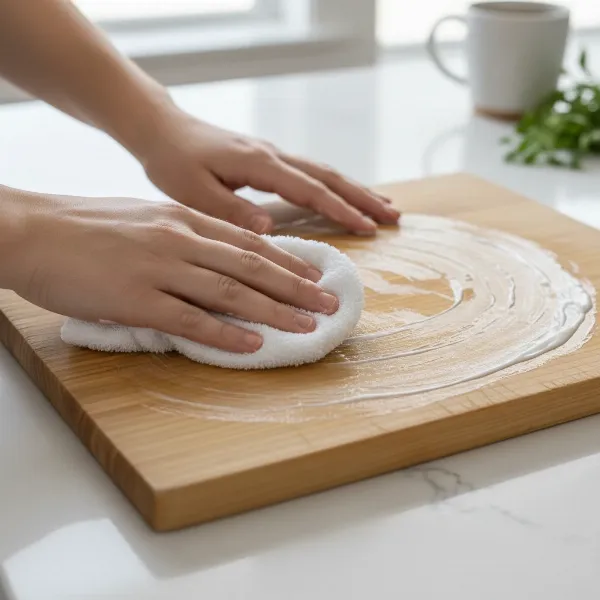 A person applies a generous layer of board cream to a wooden cutting board with a cloth for deep conditioning.
Step 4: Wipe Off Excess
After the cream has had ample time to absorb, take a fresh, clean, and dry disposable towel or paper towel and wipe off any excess board cream from the surface. You’ll want to ensure the board feels smooth and not sticky or greasy. A well-conditioned board will have a soft sheen, revealing its rejuvenated grain.
Step 5: Conditioning Reversible Boards
If you own a reversible cutting board, simply flip it over once the first side is conditioned and repeat all the steps. Both sides of the board, along with all edges, need equal attention to ensure even protection and prevent warping.
Best Practices and Tips for Optimal Results
To truly maximize the benefits of board cream and ensure the longevity of your wooden cutting board, consistency and awareness of certain practices are key.
Regarding frequency of application, deep conditioning with board cream is typically recommended monthly, or every few weeks, depending on how often you use and wash your board. This is in addition to regular maintenance with mineral oil, which might be done weekly. For boards that see heavy daily use, a slightly more frequent application might be beneficial. It’s best to observe your board; if it starts to look dry, dull, or feels rough, it’s a sign it needs conditioning.
Avoiding common mistakes is crucial. Never use vegetable oils like olive, corn, or sunflower oil for conditioning, as these can go rancid over time, leading to unpleasant odors and flavors that can transfer to your food. Also, do not soak your wooden cutting board in water, nor should you ever put it in a dishwasher, as excessive moisture and high heat will cause the wood to warp, crack, and potentially harbor bacteria. These are the quickest ways to ruin a wooden board.
While board cream provides deep conditioning, maintaining with mineral oil is still important for routine care. Mineral oil is thinner and easier to apply more frequently, forming a foundational layer of moisture. Board cream then acts as a periodic, intensive treatment to lock in that moisture and provide extra protection. Many experts recommend oiling your board weekly and conditioning with cream monthly. You can even use board cream on other wooden utensils, such as spatulas, spoons, and salad bowls, to keep them in excellent condition.
Choosing the Right Board Cream
Selecting a high-quality board cream is paramount to the health and longevity of your wooden cutting board. Not all creams are created equal, and knowing what to look for can make a significant difference.
When choosing a board cream, prioritize products that clearly state they are made with food-grade mineral oil and natural waxes like beeswax. Food-grade mineral oil is odorless, tasteless, and safe for contact with food, while beeswax provides a protective barrier and helps the cream adhere to the wood. These ingredients work synergistically to moisturize and seal the wood effectively. You should actively avoid ingredients like tung oil (unless specifically designated as food-safe), linseed oil, or any product that doesn’t explicitly state “food-grade” or “food-safe,” as these can contain harmful additives or may not be suitable for items that contact food. Furthermore, as mentioned earlier, steer clear of vegetable oils such as olive, corn, or sunflower oil, which can become rancid. Opting for reputable brands that specialize in wooden kitchenware care is always a good practice. Brands like John Boos, Howard Products, and Clark’s are well-regarded in the industry for their quality wood conditioning products. Reading customer reviews and understanding the product’s ingredient list will guide you toward the best choice for your cutting board.
“A well-maintained cutting board isn’t just about aesthetics; it’s about food safety and preserving an essential kitchen tool for generations.” – Chef Elena Rodriguez, Culinary Arts Instructor
Conclusion
Deep conditioning your wooden cutting board with a quality board cream is a simple yet profoundly impactful ritual that ensures its enduring beauty and functionality. By following a consistent routine of proper cleaning, application, and allowing adequate penetration time, you actively prevent the common issues of dryness, cracking, and dullness. This dedicated care not only extends the life of your board but also maintains a hygienic and knife-friendly surface, truly making it an investment that pays dividends in your kitchen. Embrace the practice of deep conditioning, and you’ll enjoy a vibrant, resilient Wooden Cutting Board for many years to come. What steps will you take today to give your wooden board the care it deserves?
Frequently Asked Questions
How often should I apply board cream?
Table is empty.For deep conditioning, it’s generally recommended to apply board cream once a month, especially for frequently used boards. However, you can adjust this based on your board’s appearance; if it looks dry or dull, it’s time for a treatment.
Can I use olive oil instead of board cream?
No, it is strongly advised not to use olive oil or other common vegetable oils. These oils can turn rancid over time, leading to unpleasant odors and potentially affecting the taste of your food. Always use food-grade mineral oil or a specialized board cream.
What’s the difference between board cream and mineral oil?
Mineral oil provides basic hydration and protection, soaking into the wood. Board cream, often a blend of mineral oil and beeswax, is thicker and offers deeper conditioning and a more robust protective seal, locking in moisture and preventing drying more effectively.
How long does board cream last on the board?
The protective and moisturizing effects of board cream can last for several weeks to a month, depending on usage and washing frequency. Regular reapplication is necessary to maintain its benefits.
Why is my cutting board still dry after conditioning?
If your board remains dry, you might not be applying enough cream, allowing sufficient time for penetration (aim for overnight), or your board might be severely dehydrated and require more frequent, intensive treatments initially. Ensure the board is thoroughly clean and dry before application.