Choosing the right wood for your project, whether it’s a durable cutting board, elegant furniture, or resilient flooring, often hinges on understanding its inherent hardness. The differences between popular hardwoods like maple, cherry, and walnut extend beyond their aesthetic appeal, deeply impacting their performance and longevity. This guide delves into the distinct properties of these three magnificent woods, focusing on their hardness, to help you make an informed decision that perfectly matches your needs and vision.
Understanding Wood Hardness: The Janka Scale
When evaluating wood for durability, the Janka Hardness Scale is the industry standard. This test measures the force required to embed an 11.28mm (0.444 inch) steel ball halfway into a piece of wood. The resulting number, expressed in pounds-force (lbf), provides a reliable indicator of a wood’s resistance to denting, wear, and shock. A higher Janka rating signifies a harder, more durable wood. This metric is crucial for determining how well a wood species will stand up to daily use, impacts, and general wear and tear in various applications.
Maple Wood: The Robust Workhorse
Maple, specifically hard maple (also known as sugar maple), is renowned for its exceptional density and impressive hardness. With a Janka rating of approximately 1450 lbf, it stands as the hardest among these three woods. Its coloration typically ranges from off-white to cream, sometimes with a golden hue in the sapwood, while the heartwood can exhibit reddish to dark brown tones. Maple’s grain is generally straight to wavy, and its texture is fine and even, providing a clean, bright appearance.
The primary advantage of maple is its incredible durability, making it an excellent choice for surfaces that endure heavy use. It resists dents and scratches remarkably well, making it ideal for butcher blocks, countertops, and high-traffic flooring. While its hardness ensures longevity, it can also be quite dense, sometimes making it challenging to work with tools. For cutting boards, end-grain maple is particularly favored for its resilience and ability to “heal” knife marks.
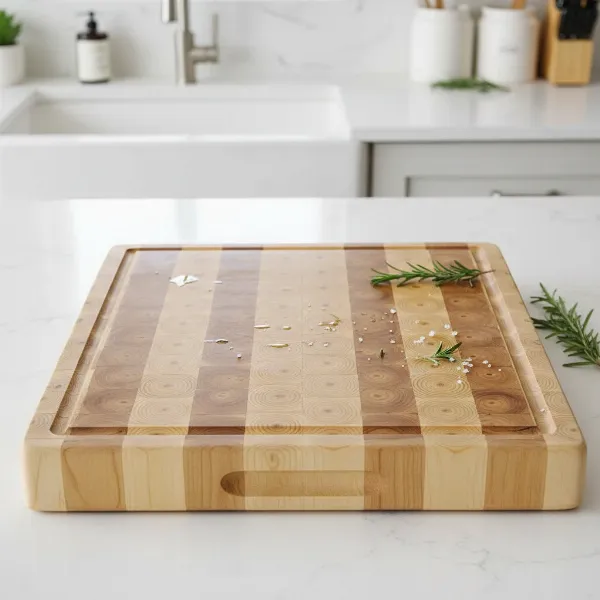 Close-up of a sturdy hard maple end-grain cutting board, showcasing its light color and fine, even grain.
Cherry Wood: Elegant and Stable
American Cherry, often prized for its warm, rich aesthetic, offers a softer touch compared to maple. It typically has a Janka hardness rating of around 950 lbf, placing it as the least hard of the trio. Cherry wood is characterized by its smooth, fine, and uniform grain, with sapwood being a creamy white and heartwood ranging from a reddish-brown to a deep, dark red. One of cherry’s most distinctive features is its beautiful aging process; with exposure to light, its color deepens and intensifies over time, developing a rich, lustrous patina.
Cherry is highly valued for its dimensional stability, meaning it resists warping and shrinking once properly dried, making it an excellent choice for fine furniture and cabinetry. Its relatively softer nature makes it more forgiving on knife edges, a desirable quality for cutting boards where aesthetics and blade care are priorities, though it may show knife marks more readily than maple. While durable enough for many indoor applications, its lower decay resistance means it’s best suited for less demanding environments than maple.
Walnut Wood: Richness and Resilience
Black Walnut strikes a balance between the extreme hardness of maple and the softer elegance of cherry, boasting a Janka rating of approximately 1010 lbf. This medium-density hardwood is celebrated for its striking dark coloration, which can range from lighter pale brown to a deep chocolate brown, sometimes with purplish or reddish hues. Its grain pattern is generally straight, though it can occasionally be irregular, and its texture is medium. Walnut is also known for its excellent shock resistance, a property that makes it highly sought after for items requiring both strength and the ability to absorb impact.
The rich, luxurious appearance of walnut makes it a premium choice for high-end furniture, cabinetry, and decorative elements. For cutting boards, walnut is a favorite due to its moderate hardness, which is kind to knife blades, and its naturally attractive dark color which can help conceal stains. While not as hard as maple, its resilience and aesthetic appeal make it a versatile option for projects where a distinctive look and moderate durability are desired.
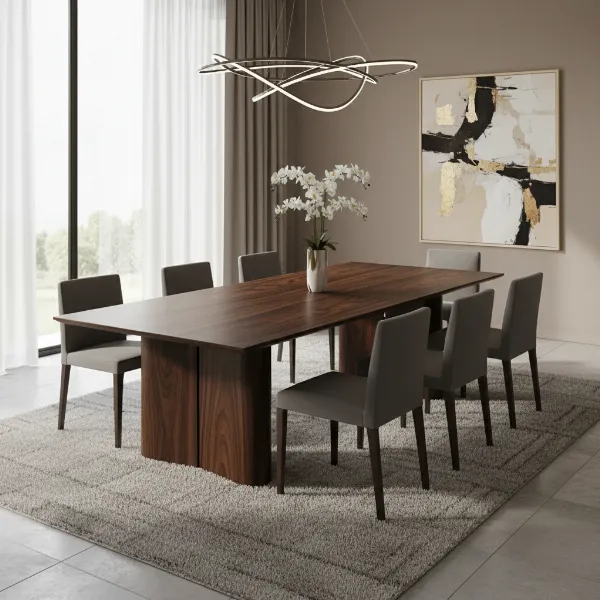 Elegant black walnut dining table, showcasing its rich, dark brown color and unique grain patterns in a modern setting.
Comparative Analysis: Maple vs. Cherry vs. Walnut
Understanding the individual characteristics of maple, cherry, and walnut is essential, but a direct comparison highlights their unique suitability for different applications.
Janka Hardness Showdown
The Janka Hardness Scale provides a clear hierarchy among these three popular hardwoods:
- Hard Maple: ~1450 lbf (Hardest)
- Black Walnut: ~1010 lbf (Medium Hardness)
- American Cherry: ~950 lbf (Softer)
This means maple is significantly more resistant to dents and scratches, followed by walnut, and then cherry. While maple offers maximum durability, walnut and cherry provide a more forgiving surface for cutting tools.
Aesthetic Appeal & Aging
Each wood possesses a distinct visual identity that evolves over time:
- Maple: Offers a bright, clean, and often contemporary look with its pale, creamy tones. It maintains its light color well, making it versatile for various stains.
- Cherry: Known for its warm, reddish-brown hues that dramatically deepen and enrich with age and exposure to light, developing a beautiful, sophisticated patina. This transformation is a key part of its appeal.
- Walnut: Features a deep, luxurious dark brown color, often with purplish undertones, making a bold statement. Its rich tone is naturally elegant and does not require staining to achieve its signature look.
Practical Applications & Durability
The varied hardness and aesthetic qualities lead to different optimal uses:
- Maple: Excels in high-traffic areas and applications demanding maximum durability, such as kitchen countertops, butcher blocks, flooring, and sturdy furniture. Its light color also lends itself well to modern designs.
- Cherry: Favored for fine furniture, cabinetry, and interior trim where its smooth finish, warm color, and dimensional stability are paramount. It’s also a good choice for decorative objects and cutting boards where a gentler surface for knives is preferred.
- Walnut: Ideal for high-end furniture, gunstocks, musical instruments, and specialty items where its rich color, shock resistance, and moderate hardness are highly valued. It also makes for stunning cutting boards that are both functional and visually appealing.
Choosing the Right Wood for Your Project
Selecting the best wood involves considering the project’s specific requirements, desired aesthetic, and expected level of wear.
For Cutting Boards
When choosing wood for cutting boards, the balance between knife-friendliness and durability is key.
- Maple: Often the top choice for its extreme hardness and durability, especially in end-grain configurations. It withstands heavy chopping and resists bacteria well due to its dense grain. However, it can be harder on knife edges over time.
- Walnut: An excellent compromise. Its moderate hardness is gentle on knives, and its darker color is aesthetically pleasing and helps hide stains. It’s a popular choice for those seeking both function and beauty.
- Cherry: A softer, more knife-friendly option. It’s beautiful and develops a rich patina, but it will show knife marks more easily than maple or walnut. Best for lighter prep tasks where blade preservation is a priority.
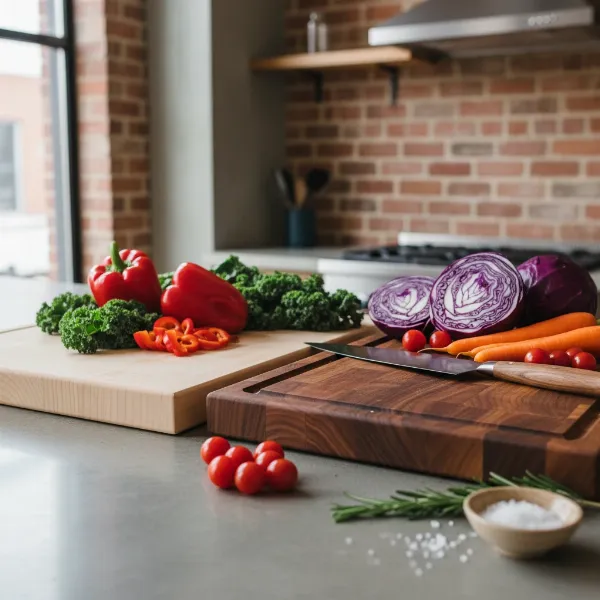 Assortment of maple, cherry, and walnut chopping boards, showcasing their distinct colors and grain for kitchen use.
For Furniture & Cabinetry
The choice of wood for furniture and cabinetry significantly impacts the piece’s style, feel, and longevity.
- Maple: Its hard-wearing nature makes it perfect for sturdy, long-lasting furniture and cabinetry, especially for modern or light-colored finishes. It’s a reliable choice for items that will see frequent use.
- Cherry: Offers a classic, elegant look that deepens with age. It’s ideal for traditional furniture, heirloom pieces, and cabinetry where warmth and sophistication are desired. It’s also easier to carve and shape than maple.
- Walnut: A luxurious choice for high-end furniture, executive desks, and bespoke cabinetry. Its rich, dark color and beautiful grain create stunning statement pieces that exude opulence and quality.
For Flooring
For flooring, durability against foot traffic and visual appeal are paramount.
- Maple: A superb choice for flooring, particularly in high-traffic areas, thanks to its exceptional hardness and resistance to wear. Its light color can brighten spaces and create a contemporary feel.
- Walnut: Can be used for flooring, offering a unique, luxurious look with its dark tones. It’s moderately durable, but perhaps best suited for areas with less intense foot traffic where its beauty can be preserved.
- Cherry: While beautiful, cherry is generally less common for flooring in high-traffic areas due to its lower hardness, which makes it more susceptible to dents and scratches than maple or even some walnuts. It can be a stunning choice for bedrooms or formal living areas where wear is less of a concern.
Care and Maintenance for Hardwood
Regardless of the wood you choose, proper care and maintenance are crucial to ensure its longevity and preserve its beauty.
- Regular Cleaning: Wipe wood surfaces with a damp cloth and mild soap. Avoid harsh chemical cleaners that can strip finishes or dry out the wood.
- Oiling: For cutting boards and butcher blocks, regularly apply food-grade mineral oil or a wood conditioner to prevent drying, cracking, and to maintain the wood’s luster. Furniture may benefit from occasional waxing or polishing with appropriate wood care products.
- Avoid Excessive Moisture: Never submerge wooden items in water or put them in a dishwasher. Wipe up spills immediately. Excessive moisture can lead to warping, cracking, or mildew.
- Control Humidity: Maintain a stable humidity level in your home to prevent wood from expanding, contracting, or cracking.
Conclusion
Choosing between maple, cherry, and walnut involves more than just picking a color; it’s about understanding the unique interplay of hardness, aesthetic qualities, and suitability for specific applications. Maple offers unparalleled durability and a bright, clean aesthetic, making it ideal for robust, high-wear items. Cherry provides classic elegance, dimensional stability, and a warm, evolving patina, perfect for fine furniture and decorative pieces. Walnut stands out with its luxurious dark tones, moderate hardness, and excellent shock resistance, lending itself to high-end furniture and specialty items. By considering the Janka hardness, visual characteristics, and your project’s demands, you can confidently select the wood that will not only perform beautifully but also bring lasting satisfaction.
Which of these hardwoods best aligns with your next woodworking endeavor or home furnishing choice?
Frequently Asked Questions
What is the Janka Hardness Scale, and why is it important for wood selection?
The Janka Hardness Scale measures the force required to embed a steel ball halfway into a piece of wood. It’s crucial for wood selection as it indicates a wood’s resistance to denting, wear, and shock, directly influencing its suitability for various applications like flooring, furniture, or cutting boards. A higher Janka rating means greater durability.
Is hard maple the same as soft maple?
No, hard maple (or sugar maple) is distinctly different and significantly harder than soft maple. Hard maple has a Janka rating of approximately 1450 lbf, while various species of soft maple typically have Janka ratings around 950 lbf. This difference impacts their durability and ideal uses, with hard maple being preferred for high-wear applications.
Does cherry wood darken over time?
Yes, cherry wood is well-known for its beautiful aging process. Upon exposure to light, its initial reddish-brown tones will gradually deepen and enrich, developing a more intense, darker red or mahogany-like patina. This natural darkening is a highly desirable characteristic that enhances its aesthetic appeal.
Is walnut a good wood for cutting boards?
Yes, black walnut is an excellent choice for cutting boards. Its moderate Janka hardness (around 1010 lbf) is gentle on knife blades, helping to keep them sharper for longer. Additionally, its rich, dark color is visually appealing and can help mask stains from food, making it a popular option for both home cooks and professional chefs.
Which wood is best for high-traffic flooring between maple, cherry, and walnut?
Between maple, cherry, and walnut, hard maple is unequivocally the best choice for high-traffic flooring. With a Janka rating of approximately 1450 lbf, it offers superior resistance to dents, scratches, and overall wear compared to black walnut (1010 lbf) and American cherry (950 lbf), ensuring greater longevity and durability in busy areas.