Choosing the right cutting board is more than just a matter of kitchen aesthetics; it’s a critical decision that directly impacts the longevity and performance of your knives. A poor choice can quickly dull even the sharpest blades, turning food preparation into a chore. Among the myriad options available, two hardwoods consistently stand out for their popularity and distinct characteristics: Teak and Maple. Both offer unique benefits, but their differences are significant, especially when it comes to how they interact with your prized cutlery. Understanding these nuances is key to making an informed decision that will serve your kitchen and your knives for years to come.
Understanding Wooden Cutting Boards
Wooden cutting boards have graced kitchens for centuries, evolving from simple planks to sophisticated culinary tools. Their enduring appeal lies in their natural beauty, durability, and most importantly, their ability to protect knife edges. Unlike harder surfaces like glass or ceramic, wood has a natural give, allowing the knife blade to sink slightly into the surface rather than hitting an unyielding material that can roll or chip the edge. This “knife-friendly” quality is paramount for maintaining sharpness and extending the life of your knives.
The type of wood and its grain orientation are crucial factors. Hardwoods, generally denser and more durable, are preferred over softwoods which can scar easily and harbor bacteria. Grain patterns—specifically end-grain versus edge-grain—also play a significant role. End-grain boards feature wood fibers oriented vertically, allowing them to “self-heal” by separating and re-closing around the blade, offering superior knife protection and less visible scarring. Edge-grain boards, with fibers running horizontally, are often more affordable and durable against heavy chopping but may show knife marks more readily.
To quantify wood hardness, the Janka hardness scale is commonly used. This scale measures the force required to embed a steel ball halfway into a piece of wood. For cutting boards, an ideal Janka rating typically falls between 900 and 1500 pounds-force (lbf), striking a balance between protecting knives and offering sufficient durability.
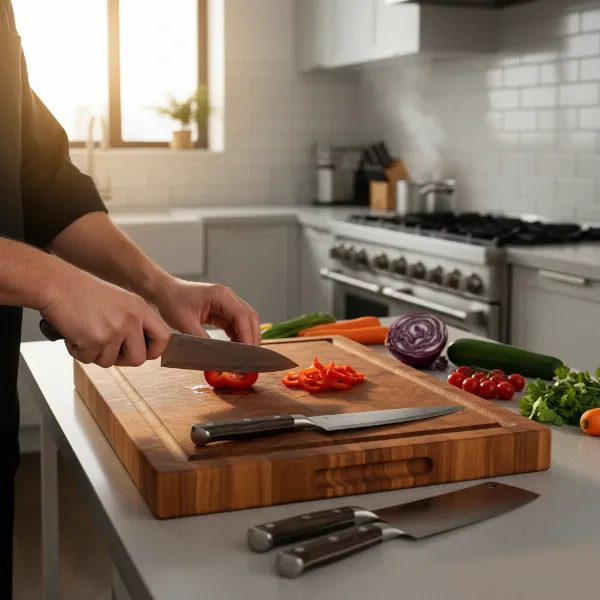 A professional chef using a well-maintained wooden cutting board with various knives and fresh ingredients, showcasing the board's functionality and aesthetic appeal in a modern kitchen setting.
Teak Cutting Boards: The Tropical Contender
Teak, a tropical hardwood celebrated for its rich, golden-brown hue and distinctive grain patterns, has carved a niche in high-end kitchens. Its striking appearance and luxurious feel make it an attractive centerpiece. Beyond aesthetics, teak is renowned for its exceptional durability and natural resilience, particularly against moisture and bacterial growth.
One of teak’s most significant advantages is its naturally high oil content. These inherent oils provide superior water resistance, making teak less prone to warping, cracking, or developing mold, even in humid environments. This characteristic also contributes to lower maintenance, as teak boards typically require less frequent oiling compared to other wooden options. Many culinary enthusiasts appreciate teak for its robust nature, which makes it a long-lasting addition to any kitchen.
However, teak cutting boards come with a notable point of contention: their impact on knife edges. Teak contains natural silica, the same abrasive substance found in sand and glass. Traditional wisdom often suggests that this silica can dull knife blades faster than other woods, with some estimates citing a 15-20% quicker dulling rate. While its Janka hardness rating of approximately 1070 lbf places it within the knife-friendly range, the silica content has historically been a concern for knife enthusiasts. Interestingly, some recent, controlled tests have challenged this long-held belief, suggesting that certain teak boards may perform surprisingly well in edge retention, even outperforming some plastic and composite options. This ongoing debate highlights the complexity of selecting the perfect cutting surface.
Maple Cutting Boards: The Kitchen Classic
Maple, particularly hard maple (Sugar Maple), is widely regarded as the “gold standard” for cutting boards and butcher blocks. Originating from North America, this dense hardwood boasts a light, creamy color and a fine, consistent grain that brightens any kitchen space. Its neutral tone also makes it easy to spot any food residue, ensuring a more hygienic prep surface.
The primary appeal of maple lies in its outstanding knife-friendliness. With a Janka hardness rating of around 1450 lbf, maple offers an optimal balance: it is hard enough to resist deep gouges and scars from heavy chopping, yet soft enough to cushion and protect delicate knife edges. This characteristic ensures that your blades stay sharper for longer, reducing the need for frequent honing and sharpening. Maple’s tight, closed-grain structure is another significant advantage. It effectively resists moisture penetration and bacterial absorption, making it a highly hygienic choice for food preparation. In fact, hard maple is approved by both the FDA and USDA for commercial food preparation surfaces, a testament to its safety and suitability.
While maple cutting boards are lauded for their performance and durability, they do require consistent care. To prevent drying out, warping, or cracking, maple boards benefit from regular oiling and conditioning, often more frequently than teak. Their density also means larger maple boards can be quite heavy, which might be a consideration for some users. Despite these minor considerations, maple’s reputation for protecting knives and providing a reliable, sanitary cutting surface remains unchallenged by many culinary professionals.
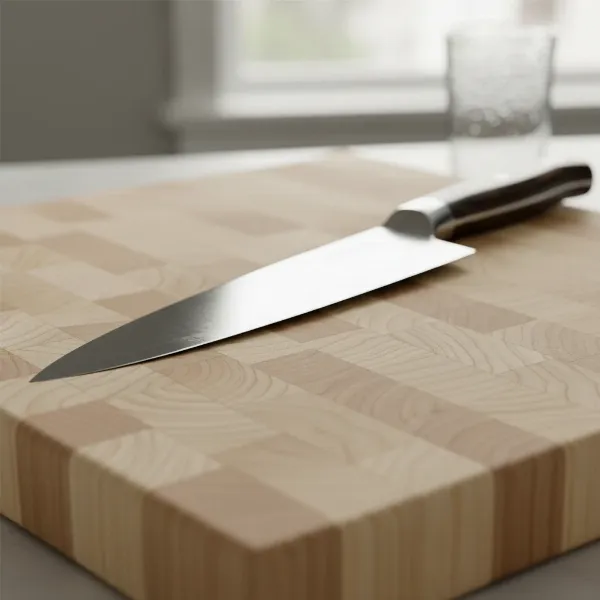 A close-up shot of a hard maple end-grain cutting board, showcasing its tight grain and smooth surface, with a sharp chef's knife resting gently on it, emphasizing its knife-friendly qualities.
Teak vs. Maple: A Head-to-Head Comparison
When deciding between teak and maple for your cutting board, a direct comparison across key attributes can illuminate which wood aligns best with your kitchen needs and knife care philosophy.
Knife Friendliness
Table is empty.This is often the most critical factor for knife enthusiasts. Maple is largely considered superior for knife edges. Its consistent hardness and tightly packed, self-healing fibers (especially in end-grain construction) provide an ideal surface that minimizes blade dulling. Renowned chef and culinary educator Chef Thomas Keller notes, “Maple offers the perfect balance of hardness and softness. It’s gentle on knives while maintaining its structure over time.” Teak, while within the knife-friendly Janka range, carries the baggage of silica content. While some modern tests suggest its impact might be overstated, the traditional consensus points to teak potentially dulling knives faster. For those with high-end, delicate Japanese knives, maple typically offers greater peace of mind.
Durability & Longevity
Both woods are incredibly durable, but in different ways. Maple (specifically hard maple) is exceptionally dense and resistant to deep cuts and gouges. Its robust structure means a well-maintained maple board can last for decades. Teak also boasts impressive durability, particularly its natural resistance to moisture and decay due to its inherent oils. This resistance means teak boards are less prone to issues like warping or bacterial growth, contributing to a very long lifespan with less intensive maintenance against environmental factors.
Maintenance
Teak generally requires less frequent oiling because of its natural oils, which help it resist water and drying out. This makes it a lower-maintenance option for those who prefer less regular upkeep. Maple, with its lower oil content, needs more consistent conditioning with mineral oil to prevent drying, cracking, and maintain its pristine condition. While it demands a bit more attention, the results are well worth the effort.
Hygiene & Food Safety
Both hardwoods are excellent choices for hygiene. Maple has a tight, closed-grain structure that naturally inhibits bacteria from penetrating its surface. Studies have shown that properly maintained wooden cutting boards, particularly those made from dense hardwoods like maple, can be more sanitary than plastic. Teak also offers natural antibacterial properties and its oil content further deters moisture and microbial growth. Both are safe choices, but maple’s closed grain is a particular highlight for preventing bacterial ingress.
Aesthetics
Teak is celebrated for its rich, warm golden-brown color and distinctive, often striking grain patterns. It offers a luxurious, exotic look that can add a dramatic flair to a kitchen. Maple provides a brighter, more classic aesthetic with its light, creamy color and subtle, consistent grain. It offers a clean, understated elegance that blends seamlessly with various kitchen designs. The choice here comes down entirely to personal preference and existing kitchen decor.
Cost
Generally, teak cutting boards tend to be more expensive due to the wood’s exotic origin and desirable properties. However, prices can vary based on sourcing (e.g., plantation teak vs. old-growth teak) and board construction. Maple boards are typically more affordable, especially considering their widespread availability and status as a domestic hardwood in many regions. You can often find high-quality maple boards at a more accessible price point.
| Feature | Hard Maple | Teak |
|---|---|---|
| Knife Friendliness | Excellent; gentle on blades, prolongs sharpness. | Good; traditional concern about silica, but some tests show good retention. |
| Durability | High; resistant to cuts and warping. | High; excellent moisture resistance, very durable. |
| Maintenance | Medium-High; requires regular oiling. | Low; natural oils reduce need for frequent conditioning. |
| Hygiene | Excellent; closed grain, naturally antibacterial, FDA/USDA approved. | Excellent; natural oils resist bacteria and moisture. |
| Aesthetics | Light, creamy, fine grain; classic and elegant. | Rich golden-brown, prominent grain; luxurious and exotic. |
| Janka Hardness | ~1450 lbf | ~1070 lbf |
| Typical Cost | Moderate | High |
Choosing the Right Board for Your Kitchen
The “best” cutting board isn’t universal; it’s the one that perfectly fits your individual needs, cooking style, and knife collection. Consider these factors when making your choice.
Consider Your Knives
If you own high-end Japanese knives or other delicate, sharp blades, prioritizing a board that is exceptionally gentle on edges is paramount. In this scenario, maple is often the safer and more recommended choice due to its proven knife-friendliness. For everyday, robust European-style knives, the differences in knife wear between teak and maple might be less noticeable, making teak a viable option if its other qualities appeal to you.
Cooking Frequency and Intensity
For those who cook frequently and engage in heavy chopping, a durable board that can withstand constant use is essential. Both maple and teak excel in durability. However, if deep gouges are a concern, a dense maple end-grain board will recover exceptionally well. For lighter, more aesthetic cutting tasks, either wood would perform beautifully.
Maintenance Commitment
Are you someone who enjoys the ritual of regular board maintenance, including frequent oiling? If so, maple will reward your efforts with a long, pristine life. If you prefer a more “set it and forget it” approach and appreciate natural resilience, teak‘s inherent oils offer a lower-maintenance solution against drying and cracking.
Budget and Aesthetic Preferences
Your budget will naturally play a role. Maple generally offers excellent value and is more widely available at various price points. Teak, often considered a premium wood, typically comes with a higher price tag. Beyond cost, consider your kitchen’s aesthetic. Do you prefer the bright, classic look of maple or the darker, exotic richness of teak? The visual appeal should complement your culinary space and personal style.
Proper Care for Wooden Cutting Boards
Regardless of whether you choose teak or maple, proper care and maintenance are crucial for extending the life of your wooden cutting board, ensuring its hygiene, and preserving its beauty. A well-cared-for board is a joy to use and a lasting investment.
Cleaning Cutting Boards Correctly
After each use, clean your board promptly. Wash it with warm water and mild dish soap. Use a soft brush or sponge to gently scrub away food particles. For thorough disinfection, periodically wipe the board with a solution of white vinegar (1 part vinegar to 4 parts water) or a slice of lemon rubbed across the surface, followed by a rinse. Always ensure to rinse off all soap and sanitizing agents completely.
Oiling and Conditioning
Regular oiling is the cornerstone of wooden cutting board care. This process moisturizes the wood, prevents it from drying out, cracking, and warping, and enhances its natural resistance to water and bacteria. Use food-grade mineral oil, beeswax conditioner, or a blend specifically designed for cutting boards. Apply a generous amount, letting the wood soak it in for several hours or overnight, then wipe off any excess. Maple boards typically require more frequent oiling (monthly or bi-weekly depending on use) compared to teak, which may only need it every few months due to its natural oils.
What to Avoid
Never put a Wooden Cutting Board in the dishwasher, as the intense heat and prolonged exposure to water will strip its natural oils, cause it to warp, crack, and potentially harbor bacteria. Avoid soaking your board in water for extended periods for the same reasons. Steer clear of harsh chemical cleaners or abrasive scrubbers, which can damage the wood’s surface and potentially leave residues that can leach into food. Always store your board upright or on its side in a dry, well-ventilated area to ensure even drying and prevent warping.
“A cutting board is an extension of your knife. Treat it with the same respect, and both will serve you well for a lifetime.” – Chef Isabella Rossi, Culinary Arts Instructor
Conclusion
The choice between a teak and a maple cutting board ultimately boils down to a thoughtful consideration of your priorities. Maple stands as the undisputed champion for knife edge preservation, offering an optimal balance of hardness and gentleness, coupled with excellent hygiene and a classic aesthetic. It’s a reliable workhorse that promises longevity with consistent care. Teak, on the other hand, presents a luxurious, low-maintenance alternative, celebrated for its natural water resistance and exotic beauty, though with a traditional caveat about its impact on knife sharpness.
Both woods are exceptional in their own right and, with proper care, will provide years of dedicated service in your kitchen. Your decision reflects not just a preference for material, but a philosophy of cooking and knife care. Which wood will become the foundation for your culinary creations?
Frequently Asked Questions
Is teak wood actually harder on knives due to silica?
While teak does contain natural silica, which theoretically could dull knives faster, some recent independent tests suggest that its