Stepping into a well-equipped kitchen, one essential tool often overlooked is the cutting board – yet it’s the foundation for countless culinary creations. If you’ve been on the hunt for a board that marries aesthetic appeal with unwavering performance and a commitment to the planet, a Teakhaus cutting board might just be your ultimate answer. Crafted from sustainably sourced teak, these boards promise a durable, knife-friendly surface designed to elevate your cooking experience. This comprehensive guide delves into what makes Teakhaus stand out, examining its unique features, undeniable benefits, potential considerations, and how to choose and care for one, ensuring it remains a cherished part of your kitchen for years to come.
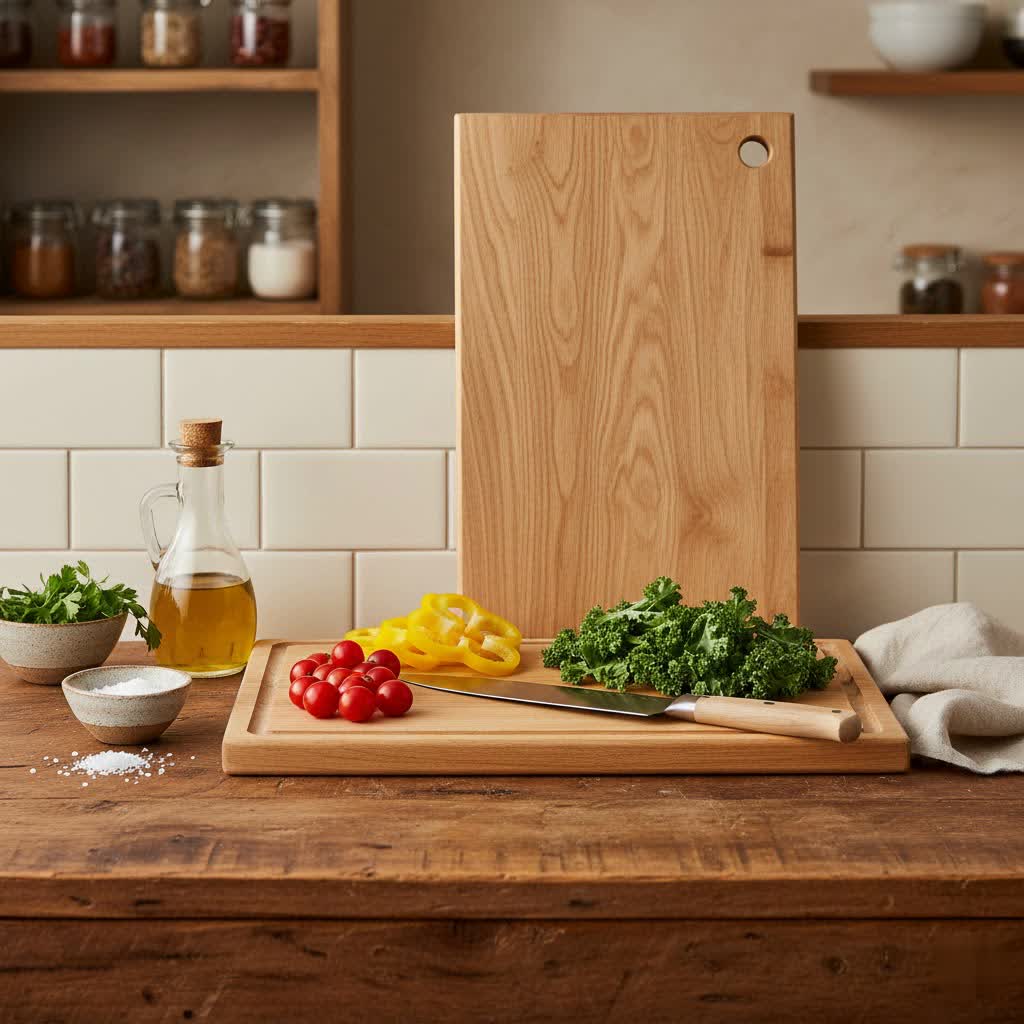
Wooden Cutting Board Overview
Wooden cutting boards have graced kitchens for centuries, celebrated for their natural beauty and functional benefits. Far more than just a surface for slicing and dicing, they play a crucial role in protecting countertops and maintaining knife sharpness. Historically, cultures around the globe have utilized various native hardwoods to create these indispensable kitchen tools, evolving from simple slabs to sophisticated butcher blocks. Today, the choice of wood is paramount, with hardwoods like maple, walnut, and cherry being popular due to their density and durability. Bamboo, while technically a grass, is also widely used for its rapid renewability and unique properties. Understanding the general characteristics of wooden boards provides a vital context for appreciating the specialized qualities of a Teakhaus board.
Teakhaus Cutting Boards: A Deeper Dive into Teak
Teakhaus distinguishes itself by focusing exclusively on teak, a tropical hardwood renowned for its exceptional qualities. Teak wood boasts a naturally high oil content, making it inherently resistant to moisture, bacteria, and decay, qualities that are highly desirable in a cutting surface. This medium hardness wood provides an ideal balance, being gentle on knife edges to help them stay sharper longer, yet resilient enough to withstand daily use. The result is a luxurious cutting experience that protects both your tools and your culinary investments.
What truly sets Teakhaus apart is its unwavering commitment to sustainability. Their teak is sourced from 100% FSC® (Forest Stewardship Council) certified plantations in Mexico, specifically managed by their parent company, Proteak Renewable Forestry. These plantations are designed for zero-waste production, cultivating trees without the need for irrigation or artificial fertilizers, thereby minimizing environmental impact and supporting biodiversity. Even their packaging reflects this ethos, being 100% recycled and recyclable. This rigorous approach ensures that every Teakhaus board is not just a high-quality kitchen tool but also a testament to responsible forestry and eco-conscious living.
The brand’s reputation is further solidified by endorsements from culinary authorities like America’s Test Kitchen and Cook’s Illustrated, who have hailed Teakhaus as the “Last Cutting Board You’ll Ever Need” and the “Best Heavy Duty Cutting Board”. These accolades underscore the superior craftsmanship and performance that define Teakhaus products.
Advantages and Disadvantages of Teakhaus Cutting Boards
Every kitchen tool comes with its own set of pros and cons, and Teakhaus cutting boards are no exception. Understanding these aspects helps in making an informed decision about whether a Teakhaus board is the right fit for your culinary endeavors.
Advantages
Teakhaus cutting boards offer a compelling list of benefits that appeal to both home cooks and professional chefs alike.
- Exceptional Durability: Thanks to its inherent high oil content, teak is remarkably resistant to moisture, preventing warping and cracking, leading to a board that can last for many years, even with heavy daily use.
- Knife-Friendly Surface: The medium hardness of teak wood provides an ideal cutting surface that is forgiving on knife blades, helping them maintain their sharp edge for longer periods.
- Natural Aesthetics: Teak boards boast a beautiful, warm golden hue with a distinctive grain pattern, making each piece unique and adding an elegant, inviting touch to any kitchen décor [cite: 2 (search result 2 for pros and cons), 4, 5].
- Natural Resistance to Bacteria: Teak’s dense grain and natural oils contribute to its natural resistance to bacteria, promoting a more hygienic food preparation surface [cite: 2 (search result 3 for care and maintenance), 5].
- Sustainability Credentials: With FSC® certification and a commitment to waste-free production and responsible forestry, Teakhaus boards are an excellent choice for environmentally conscious consumers.
- Ease of Initial Maintenance: Boards often come pre-finished with mineral oil and beeswax, making them ready to use right out of the box and simplifying initial care [cite: 1, 3 (search result 3 for care and maintenance), 5].
Disadvantages
Despite their many benefits, there are a few considerations to keep in mind when choosing a Teakhaus cutting board.
- Heft and Weight: Teak boards, particularly larger models, can be quite heavy. This weight contributes to stability during use but may make them cumbersome to move, clean, and store for some users [cite: 1 (search result 1 for pros and cons), 2 (search result 2 for pros and cons)].
- Higher Price Point: Teak is generally more expensive than other common cutting board woods like maple or bamboo, reflecting its quality, durability, and sustainable sourcing [cite: 1 (search result 1 for pros and cons)].
- Regular Oiling Required: While initially pre-oiled, teak boards require consistent oiling (every 2-3 weeks or at least once a month) to prevent drying, cracking, and to maintain their lustrous appearance [cite: 3 (search result 3 for care and maintenance), 5 (search result 5 for care and maintenance)].
- Potential for Minor Surface Imperfections: Although generally durable, some users have reported minor splintering or shedding upon initial washing, which could indicate a rare quality control issue or sensitivity to cleaning methods [cite: 3 (search result 3 for reviews sustainability)].
- Silica Content: Teak naturally contains silica, which some experts suggest could potentially dull knives slightly faster than woods like maple [cite: 3 (search result 3 for care and maintenance)]. However, many users still find teak to be gentle on knives overall.
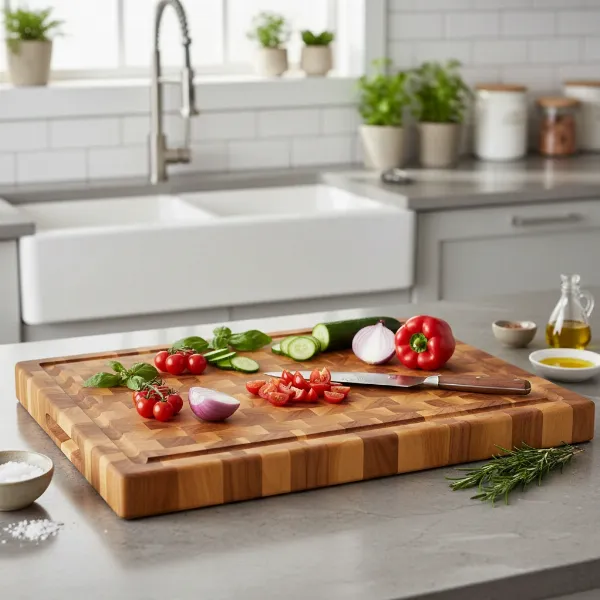 A beautiful Teakhaus cutting board with a warm, golden hue resting on a modern kitchen counter, surrounded by fresh ingredients.
Exploring Teakhaus Cutting Board Designs
While Teakhaus exclusively uses teak wood, they offer various designs and constructions to suit different kitchen needs and aesthetic preferences. The primary types revolve around how the wood is assembled, impacting both durability and appearance.
- Edge Grain Cutting Boards: Many Teakhaus boards, including award-winning models, feature an edge grain construction. In these boards, the wood strips are glued together with their long edges facing up. This construction offers good durability and a smooth, stable cutting surface that is highly resistant to warping. Edge grain boards often showcase the natural beauty of teak’s distinct linear patterns.
- End Grain Butcher Block Cutting Boards: For those seeking the ultimate in durability and knife preservation, Teakhaus also offers end grain butcher block designs. Here, the individual wood fibers are arranged vertically, forming the cutting surface. When a knife slices down, the blade goes between the fibers rather than cutting across them, which can help knives stay sharper for even longer and makes the board more resistant to visible knife marks. End grain boards also have a unique checkerboard or mosaic-like appearance.
- Sizes and Features: Teakhaus boards come in a range of sizes, from smaller prep boards to large, extra-long carving boards with ample surface area for big tasks [cite: 2 (search result 2 for reviews sustainability), 4]. Many models include practical features like juice grooves to catch liquids from meats and fruits, keeping your countertop clean. Integrated hand grips are also common, making it easier to lift and move even the heavier boards.
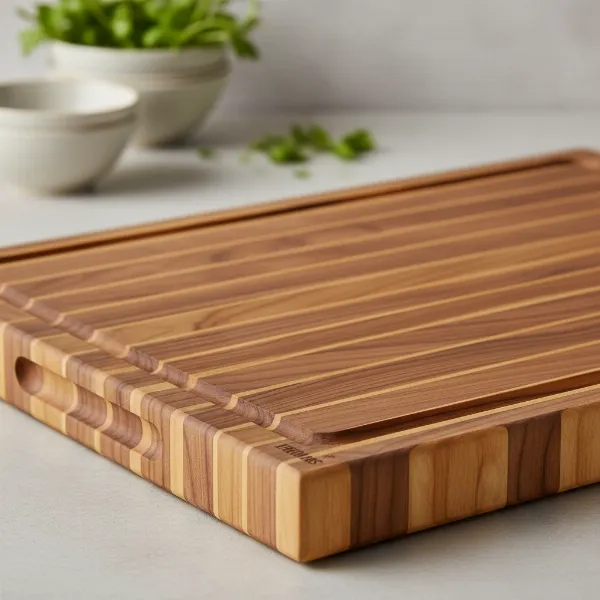 Close-up view of a Teakhaus cutting board, highlighting its edge grain construction, rich wood patterns, and a subtle juice groove.
Comparison Table: Teakhaus (Teak) vs. Other Popular Cutting Board Materials
Choosing a cutting board often involves weighing the pros and cons of various materials. Here’s how Teak (represented by Teakhaus) stacks up against other common options:
| Feature | Teak (Teakhaus) | Maple/Walnut (Hardwood) | Bamboo | Plastic (Polypropylene) |
|---|---|---|---|---|
| Durability | Very High; natural oils resist moisture, warping. | High; dense grain, very resilient. | Moderate; prone to splitting if not well-maintained. | High; resistant to impact, but scratches easily. |
| Knife Friendliness | Excellent; medium hardness, helps retain sharp edges. | Excellent; dense yet forgiving on blades. | Good; harder than wood, can dull knives slightly faster. | Poor; very hard, quickly dulls knife edges. |
| Aesthetics | Beautiful, warm golden tones, distinctive grain. | Classic, elegant, varied natural wood patterns. | Light, uniform, modern look. | Industrial, utilitarian, comes in various colors. |
| Antimicrobial Props. | High; natural oils provide inherent resistance. | Moderate to High; naturally porous, but dries quickly. | Moderate; some natural resistance, but can absorb moisture. | Low; plastic grooves can harbor bacteria if not deep cleaned. |
| Maintenance | Regular oiling (2-3x/month), hand wash. | Regular oiling (1x/month), hand wash. | Regular oiling, careful hand washing to prevent splitting. | Dishwasher safe, easy to clean. |
| Cost | Higher; premium wood, sustainable sourcing. | Moderate to High; depending on size and construction. | Low to Moderate; very affordable. | Low; most budget-friendly option. |
| Sustainability | Very High; FSC® certified, eco-friendly practices. | Varies; depends on sourcing, generally renewable. | High; rapidly renewable, but processing can vary. | Low; made from petroleum, not biodegradable. |
| Weight | Moderate to Heavy; can be substantial for large boards. | Moderate to Heavy; solid, stable. | Light to Moderate; generally lighter than hardwoods. | Light; very easy to handle. |
Teakhaus Buying Guide: Choosing Your Ideal Board
Selecting the perfect Teakhaus cutting board involves considering your specific kitchen needs, aesthetic preferences, and commitment to sustainable living.
Determine Your Needs and Space
Before committing, envision how you’ll use your cutting board daily.
- Size and Kitchen Space: Evaluate your counter space and storage availability. Teakhaus offers a range of sizes; a larger board provides more prep area for big tasks like carving roasts, while smaller ones are ideal for quick chopping or serving.
- Types of Food: Consider the foods you’ll be prepping most often. A board with a juice groove is invaluable for meats, while a flat surface is versatile for vegetables, bread, and pastries.
- Budget: Teakhaus boards are an investment. While they are a higher price point, their durability and sustainability often make them cost-effective in the long run.
Understand Teak Features
Delve into the specific constructions Teakhaus offers to match your usage style.
- Edge Grain vs. End Grain: Edge grain boards are often more affordable and visually showcase the wood’s long, flowing lines. End grain boards, though typically pricier, are often considered superior for knife longevity and self-healing properties, making them excellent for heavy chopping.
- Additional Features: Look for details like integrated hand grips for easier maneuverability or specific shapes that fit your kitchen’s aesthetic.
Verify Sustainability Claims
One of Teakhaus’s strongest selling points is its sustainability.
- FSC® Certification: Always ensure the product explicitly states its FSC® certification, which guarantees the wood comes from responsibly managed forests. Teakhaus proudly highlights this.
Check Quality and Reviews
Leverage expert and user feedback to affirm your choice.
- Expert Endorsements: Consider the recommendations from reputable culinary sources like America’s Test Kitchen, which has thoroughly tested and praised Teakhaus boards.
- User Feedback: Read customer reviews for insights into long-term durability, maintenance experiences, and satisfaction. Look for comments on how the board performs in real-world kitchens.
> “A Teakhaus board isn’t just a purchase; it’s an investment in sustainable quality that truly stands the test of time in a busy kitchen.” – Chef Elena Rodriguez, Culinary School Instructor
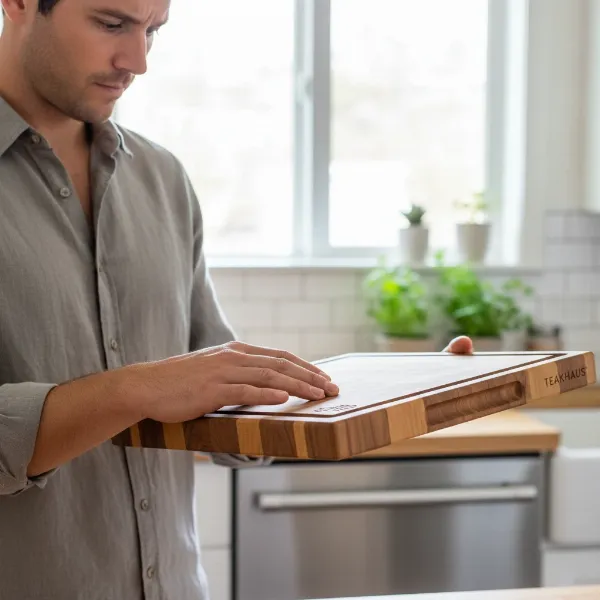 A person carefully examining a Teakhaus cutting board in a kitchen setting, focusing on the wood grain and overall quality.
How to Clean and Maintain Your Teakhaus Cutting Board
Proper care is paramount to ensuring the longevity and hygienic quality of your Teakhaus cutting board. While teak is naturally durable, consistent maintenance will preserve its beauty and functionality for decades.
Proper Cleaning for Teakhaus Boards
Effective cleaning after each use is vital to prevent bacterial growth and maintain the board’s integrity.
- Hand Wash Immediately: After each use, wash your board by hand with hot, soapy water. Avoid letting food residue dry on the surface [cite: 1 (search result 1 for care and maintenance)].
- Use a Soft Brush or Sponge: Gently scrub the entire surface to remove any food particles. For stubborn stains or odors, you can rub half a lemon generously sprinkled with coarse salt or baking soda across the board, then rinse [cite: 1 (search result 1 for care and maintenance)].
- Rinse Thoroughly and Dry Immediately: Rinse the board completely under warm running water. The most crucial step is to immediately dry it with a clean kitchen towel.
- Air Dry Completely: After towel drying, stand the board on its edge to allow air to circulate around all surfaces, ensuring it dries completely before storage. Never store a damp board [cite: 1 (search result 1 for care and maintenance)].
- Absolutely No Dishwashers or Soaking: Exposure to extreme heat and prolonged moisture from a dishwasher or soaking in water can cause teak to warp, crack, or split, permanently damaging your board [cite: 1 (search result 1 for care and maintenance), 2 (search result 2 for care and maintenance)].
Oiling and Conditioning Your Board
Regular conditioning is the secret to keeping your Teakhaus board looking new and preventing it from drying out.
- Frequency: Teakhaus recommends applying mineral oil or their own conditioning oil at least two to three times a month, or at minimum, once a month, to keep the wood moisturized and prevent cracking [cite: 3 (search result 3 for care and maintenance), 5 (search result 5 for care and maintenance)].
- Type of Oil: Use food-grade mineral oil or a wood conditioner specifically designed for cutting boards (often a blend of mineral oil and beeswax). Avoid cooking oils like olive or vegetable oil, as they can go rancid and impart unpleasant odors [cite: 4 (search result 4 for care and maintenance)].
- Application: Apply a generous amount of oil with a clean cloth, ensuring it covers all surfaces – front, back, and sides. Let the oil soak in for several hours, ideally 12-24 hours. Wipe off any excess oil with a clean cloth, buffing to a soft sheen [cite: 5 (search result 5 for care and maintenance)]. If water beads up on the surface, your board is adequately seasoned [cite: 4 (search result 4 for care and maintenance)].
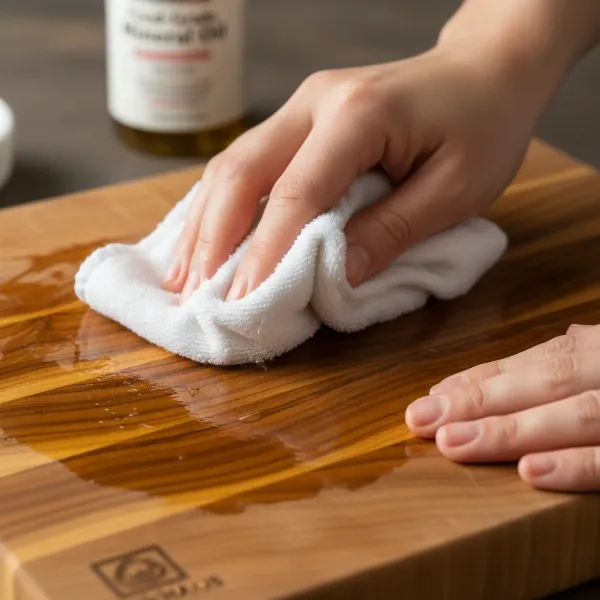 A hand applying food-grade mineral oil to a Teakhaus cutting board with a soft cloth, highlighting the care process.
Maximizing Your Teakhaus Cutting Board’s Lifespan
Beyond routine cleaning and oiling, a few practical tips can help ensure your Teakhaus cutting board remains a high-performing kitchen companion for years to come.
- Designate Boards: If possible, use separate cutting boards for raw meats and cooked foods or produce to prevent cross-contamination. While teak offers natural resistance, this practice adds an extra layer of hygiene.
- Ensure Stability: Always place a damp cloth or a non-slip mat underneath your cutting board. This simple step prevents the board from slipping during vigorous chopping, enhancing safety and making your cutting tasks more efficient.
- Gentle Chopping: While teak boards are robust, avoid excessively forceful chopping or hacking motions, especially with cleavers. Distribute your cutting across the board’s surface rather than concentrating it in one spot to minimize wear and tear.
- Rotate Regularly: If you tend to use one side or area of your board more frequently, try to rotate it or flip it over occasionally. This helps ensure even wear and exposure to moisture and oil, promoting uniform conditioning.
- Address Damage Promptly: Should your board develop minor nicks or dry spots, address them quickly. Light sanding with fine-grit sandpaper followed by a thorough oiling can often restore its surface.
- Consider Periodic Replacement: Even the most durable Wooden Cutting Boards have a lifespan. Generally, replacing heavily scarred or deeply grooved boards every 1-2 years (or when they show signs of irremediable damage) is good practice for hygiene and performance, although many Teakhaus users report much longer lifespans of 6-12 years with proper care.
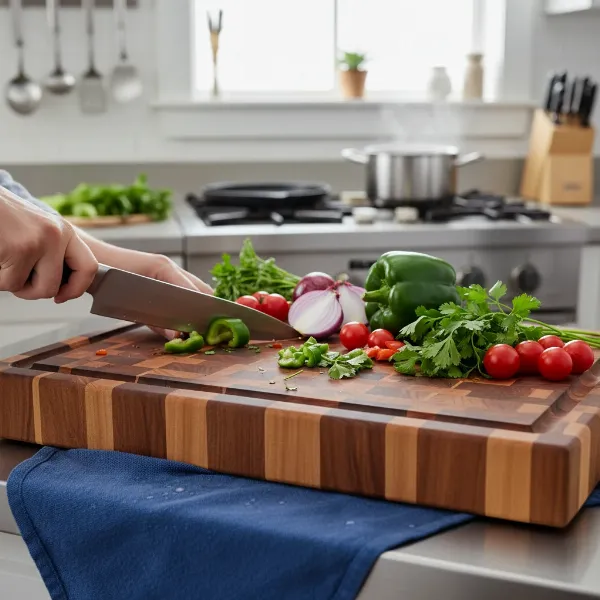 A Teakhaus cutting board in active use with various ingredients being prepared, showcasing practical tips like using a damp cloth underneath.
Conclusion
The Teakhaus cutting board is more than just a surface for food preparation; it’s a testament to sustainable craftsmanship, exceptional durability, and thoughtful design. With its FSC®-certified teak wood, natural resistance to moisture and bacteria, and a gentle touch on your knife blades, it stands as a premium choice for any kitchen. While it requires consistent care and represents a higher initial investment, its long lifespan and eco-friendly credentials make it a truly sustainable pick. By following the simple care and maintenance guidelines, your Teakhaus board will not only enhance your culinary journey but also serve as a beautiful, enduring centerpiece in your kitchen. Are you ready to make a sustainable choice that transforms your daily cooking experience?
Frequently Asked Questions
What makes Teakhaus cutting boards sustainable?
Teakhaus boards are made from 100% FSC®-certified teak wood, sourced from sustainably managed plantations in Mexico. These operations employ waste-free production, cultivate trees without irrigation or fertilizers, and use recycled, recyclable packaging, minimizing environmental impact.
How often should I oil my Teakhaus cutting board?
For optimal care, Teakhaus recommends oiling your board with food-grade mineral oil or their conditioning oil at least two to three times a month. This regular conditioning prevents the wood from drying out, cracking, and helps maintain its beautiful appearance.
Can Teakhaus cutting boards really last a lifetime?
With proper care and maintenance, Teakhaus cutting boards are exceptionally durable. Many users report boards lasting 6-12 years or more, even with daily heavy use. While “lifetime” can be subjective, their longevity far surpasses many other cutting board materials.
Is teak wood truly gentle on knives?
Yes, teak wood’s medium hardness is considered very kind to knife edges, helping them retain their sharpness longer than harder materials like plastic or some bamboos. While it contains silica, its overall texture is forgiving for blade longevity.
How do I remove stubborn stains or odors from my Teakhaus board?
For persistent stains or odors, sprinkle coarse salt or baking soda generously over the affected area and scrub with half a lemon. Allow it to sit for a few minutes, then rinse thoroughly with hot, soapy water and dry immediately.