For centuries, the humble cutting board has been an indispensable tool in kitchens worldwide, evolving from simple slabs of wood to sophisticated culinary surfaces. Among the myriad materials available today, walnut wood stands out, particularly for professional chefs and serious home cooks who demand both performance and aesthetic appeal. If you’ve ever wondered what makes a cutting board truly exceptional, the answer often lies in the quality of its material and craftsmanship. Walnut, with its rich, deep hues and remarkable properties, has earned its place as a premium choice, offering a cutting experience that elevates daily meal preparation into an art form. This comprehensive guide will delve into the world of walnut cutting boards, exploring their unique advantages, helping you choose the best for your culinary needs, and ensuring they last a lifetime in your kitchen.
Wooden Cutting Board Overview
A wooden cutting board is more than just a surface for slicing and dicing; it’s a cornerstone of kitchen functionality. Historically, wood has been the material of choice due to its natural properties that make it ideal for food preparation. From early civilizations utilizing rudimentary wood blocks to the finely crafted butcher blocks of today, wooden cutting boards have continuously adapted while retaining their core benefits.
Walnut, particularly American Black Walnut, is a premier hardwood frequently employed in cutting board construction. Its dense grain and attractive appearance make it a favorite. Other popular woods include maple, known for its hardness and light color, and teak, prized for its natural oils and moisture resistance. Bamboo, while technically a grass, is also widely used for its sustainability and durability, though it can be harder on knife blades than true hardwoods. Each wood offers a unique balance of characteristics, but walnut consistently ranks high for its blend of beauty and utility in a professional setting.
Advantages and Disadvantages of Walnut Cutting Boards
Choosing the right cutting board involves weighing the pros and cons of various materials. Walnut cutting boards, while highly regarded, come with their own set of considerations for the discerning chef.
Advantages
Walnut cutting boards offer several compelling benefits that make them a top choice for professional culinary environments:
- Exceptional Aesthetics: The deep, rich brown tones and distinctive grain patterns of walnut create a visually stunning piece that can double as an elegant serving platter for charcuterie or appetizers.
- Knife-Friendly Surface: Walnut’s moderate hardness (around 1010 on the Janka scale) is ideal. It’s firm enough to resist deep gouges yet forgiving enough to prevent premature dulling of your valuable knives, allowing the blade to sink slightly into the wood fibers.
- Natural Antimicrobial Properties: Like other hardwoods, walnut possesses natural compounds that inhibit bacterial growth, making it a hygienic choice for food preparation when properly cleaned.
- Remarkable Durability: With proper care and maintenance, a high-quality walnut cutting board can endure years of heavy use in a busy kitchen, becoming a long-lasting investment.
- “Self-Healing” Qualities (End Grain): End grain walnut boards, where wood fibers are oriented vertically, can show fewer knife marks over time as the fibers tend to “close up” after cuts, helping to maintain a smoother surface.
Disadvantages
Despite their many advantages, walnut cutting boards also present a few drawbacks:
- Requires Consistent Maintenance: To prevent drying, cracking, or warping, walnut boards need regular oiling with food-grade mineral oil and conditioning with board cream.
- Higher Cost: Due to the premium nature of walnut wood and the craftsmanship involved, these boards typically come with a higher price tag compared to plastic or bamboo alternatives.
- Susceptibility to Stains and Odors: While less prone to staining than lighter woods like maple, walnut can still absorb strong odors or become stained by highly pigmented foods if not cleaned promptly.
- Not Dishwasher Safe: The harsh detergents and high heat of a dishwasher will quickly damage and destroy a Wooden Cutting Board, leading to cracking and warping. Hand washing is essential.
- Weight: Larger, thicker walnut butcher blocks, while incredibly stable, can be quite heavy and challenging to move or clean for some users.
Popular Types of Walnut Cutting Boards
Walnut cutting boards come in various constructions, each offering distinct characteristics that influence performance and aesthetics. Understanding these types is crucial for selecting the best board for your kitchen.
Hardwood Cutting Boards
Walnut is a prime example of a hardwood used for cutting boards. These boards are renowned for their balance of durability and knife-friendliness.
- Examples: American Black Walnut, Maple, Cherry.
- Advantages: High durability, exceptional knife preservation, beautiful grain patterns, and can last for decades with proper care.
- Disadvantages: Generally higher cost, and require consistent maintenance (oiling) to prevent drying and cracking.
Softwood Cutting Boards
While not typically used for high-quality, professional-grade cutting boards, softwoods are sometimes found in more budget-friendly options.
- Examples: Pine, Fir.
- Advantages: Lower cost, lighter weight.
- Disadvantages: Easily scratched and gouged, dull knives quickly, and are less durable and hygienic.
Bamboo Cutting Boards
Often presented as an eco-friendly alternative, bamboo is technically a grass, not a wood.
- Advantages: Sustainable, good resistance to water, and often less expensive.
- Disadvantages: Very hard surface can dull knives quickly, prone to delaminating (splitting into layers) over time, and can be less stable than solid wood.
Butcher Block Cutting Boards
This category primarily refers to the construction method, which can be either end grain or edge grain. Walnut is frequently used in butcher block style.
- End Grain: Characterized by a checkerboard pattern where the ends of wood fibers are visible on the cutting surface.
- Advantages: Most knife-friendly (fibers “heal” over cuts), incredibly durable, and stunning aesthetics.
- Disadvantages: Highest cost, heavier, and requires more oiling due to greater exposed end grain.
- Edge Grain: Made from long strips of wood glued together with the edges of the grain facing up.
- Advantages: Very durable, more affordable than end grain, and generally easier to maintain.
- Disadvantages: Shows knife marks more readily than end grain, and can be slightly harder on knives over extended use.
Comparison of Various Cutting Board Materials
When outfitting a professional kitchen, selecting the right cutting board material is paramount. Here’s a detailed comparison to help you understand where walnut stands against other popular choices.
| Feature | Walnut (Hardwood) | Maple (Hardwood) | Teak (Hardwood) | Bamboo (Grass) | Plastic (HDPE) |
|---|---|---|---|---|---|
| Durability | High (excellent for long-term use) | Very High (exceptionally hard and dense) | High (natural oils provide water resistance) | Moderate (can delaminate) | Moderate (scratches easily, harbors bacteria) |
| Knife-Friendliness | Excellent (gentle, preserves blade sharpness) | Good (slightly harder than walnut, still good) | Good (gentle due to natural oils) | Poor (very hard, dulls knives quickly) | Poor (dulls knives, creates microplastics) |
| Antimicrobial | Natural properties | Natural properties | Natural properties | Moderate (prone to moisture retention) | Chemical (if sanitized, otherwise harbors bacteria) |
| Price | High (premium investment) | Medium-High (classic professional choice) | High (tropical hardwood) | Low-Medium (affordable, eco-friendly) | Low (most budget-friendly) |
| Maintenance | Regular oiling, hand wash, air dry | Regular oiling, hand wash, air dry | Moderate oiling (natural oils), hand wash | Regular oiling, hand wash, air dry | Easy (dishwasher safe, but scratches are an issue) |
| Aesthetics | Rich, dark tones; elegant | Light, classic look; clean | Golden-brown; distinctive grain | Light, striped; modern | Industrial; functional |
| Stain Resistance | Good (dark color hides stains) | Moderate (shows dark stains easily) | Excellent (natural oils resist stains) | Moderate (can stain over time) | Good (if un-scratched), but stains in grooves |
Walnut strikes an admirable balance, offering superior knife preservation and striking beauty, making it a favorite for many culinary professionals. Maple provides exceptional durability and a classic look, while teak excels in water resistance and lower maintenance. Plastic and bamboo, while budget-friendly, often compromise on knife care and long-term hygiene for high-volume, professional applications.
Guide to Selecting the Right Walnut Cutting Board
Choosing the ideal walnut cutting board for a professional kitchen involves careful consideration of several factors to ensure it meets both practical demands and aesthetic preferences.
Assess Your Culinary Needs
Before making a purchase, reflect on your daily kitchen routine:
- Size Matters: Consider the available counter space and the volume of food you typically prepare. Larger boards (20×15 inches or more) are excellent for extensive prep work and carving, while smaller ones are ideal for quick tasks or serving.
- Primary Use: Will the board be primarily for heavy chopping, delicate slicing, or perhaps also for serving? A board with a juice groove is invaluable for carving meats, while a flat surface is versatile for all-purpose prep.
- Budget: Walnut boards are an investment. Determine your budget range to focus on options that offer the best value within your financial comfort.
Select the Appropriate Construction
Walnut boards are predominantly found in two constructions:
- End Grain: If preserving your knife edges is the utmost priority and you engage in heavy chopping, an end grain walnut board is superior. Its construction allows knife blades to glide between the wood fibers, minimizing dulling.
- Edge Grain: For a durable, versatile board that handles general prep well and is slightly more affordable, an edge grain walnut board is an excellent choice. It’s also generally easier to maintain.
Examine Board Quality and Craftsmanship
A quality walnut cutting board will exhibit certain hallmarks:
- Flat and Smooth Surface: The board should be perfectly flat without any warping or unevenness. The finish should be smooth to the touch, free from splinters or rough patches.
- Tight Joints: Inspect the glue lines; they should be barely visible and uniform, indicating strong, durable construction with food-safe adhesives.
- No Cracks or Gaps: Avoid boards with any visible cracks, checks, or gaps, as these can harbor bacteria and lead to structural failure over time.
- Weight and Stability: A heavier board often indicates dense, quality wood and will provide superior stability during vigorous chopping.
Reputable Brands and Sources
Investing in a walnut cutting board means choosing a brand known for its quality and commitment to craftsmanship.
“A quality wooden board is forgiving on knives and, when well-maintained, can last a decade or longer.”
Look for manufacturers with strong reputations, often highlighted in professional culinary reviews. Brands like John Boos, Virginia Boys Kitchens, and other artisan woodworkers frequently receive high praise for their durable and aesthetically pleasing walnut boards. Purchase from trusted retailers or directly from manufacturers to ensure authenticity and access to customer support.
Top 5 Walnut Cutting Boards for Professional Chefs
For professional chefs, a cutting board is an extension of their craft—a robust surface that not only withstands rigorous daily use but also protects valuable knife edges and enhances the kitchen’s aesthetic. Here are five exceptional walnut cutting boards that meet the high standards of culinary experts.
-
John Boos Walnut Wood Edge Grain Reversible Cutting Board: Widely regarded as an industry standard, John Boos boards are a favorite among professionals. This edge grain model, crafted from American Black Walnut, offers remarkable durability and stability. Its reversible design and optional juice groove make it versatile for various tasks, from carving roasts to precise vegetable prep. The rich, dark color and substantial weight ensure it stays put during intense chopping, a critical feature in a busy kitchen.
-
Virginia Boys Kitchens Black Walnut Cutting Board: Known for their commitment to sustainable sourcing and high-quality craftsmanship, Virginia Boys Kitchens offers a stunning black walnut board. This American-made board is often praised for its beautiful deep tones and dense construction, making it highly resistant to knife marks. It’s gentle on blades and can function beautifully as both a prep surface and an elegant serving piece.
-
Our Place Walnut Cutting Board: While Our Place is known for its stylish kitchenware, their walnut cutting board delivers on both form and function. This board typically features a thoughtful design, often with integrated features like a well for collecting liquids or scraps, enhancing efficiency in a professional setting. Its solid walnut construction provides a reliable and attractive surface for everyday culinary tasks.
-
Sonder LA Alfred End Grain Walnut Board: For those prioritizing knife longevity, the Sonder LA Alfred End Grain Walnut Board is an outstanding choice. The end grain construction allows knife blades to slide between wood fibers, reducing wear and tear on your sharpest tools. This board’s substantial thickness and exquisite checkerboard pattern make it a luxurious yet highly functional addition to any professional kitchen.
-
The Angled Board by Material (Walnut Option): Material’s Angled Board, available in walnut, offers a unique design often appreciated by chefs. Its ergonomic angle can provide a more comfortable cutting experience, reducing strain during long prep sessions. Crafted from durable walnut, it combines a modern aesthetic with reliable performance, making it a versatile choice for a range of culinary applications.
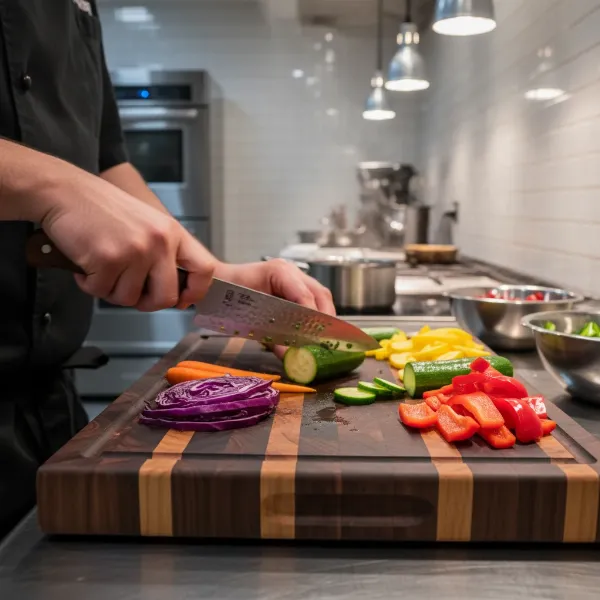 A professional chef meticulously slicing vegetables on a large, rich dark walnut end-grain cutting board in a well-lit, modern kitchen setting.
How to Clean and Maintain Your Walnut Cutting Board
Proper care is paramount to extending the life and beauty of your walnut cutting board. Neglecting maintenance can lead to warping, cracking, and unsanitary conditions, rendering your investment useless.
Correct Cleaning Techniques
After each use, thorough and immediate cleaning is essential:
- Hand Wash Immediately: Never put a walnut cutting board in the dishwasher. Wash it by hand using warm water and a mild dish soap.
- Gentle Scrubbing: Use a soft sponge or brush to remove food debris. For stubborn stains or odors, a paste of baking soda and a slice of lemon can be effective.
- Rinse Thoroughly: Rinse both sides of the board evenly to prevent uneven moisture absorption, which can cause warping.
- Disinfect (Optional but Recommended): Occasionally, you can disinfect your board with a solution of one part white vinegar to four parts water, or a sprinkle of coarse salt and half a lemon rubbed over the surface. Rinse well afterward.
- Dry Completely: Crucially, wipe the board dry with a clean towel immediately after washing. Then, stand it on its edge in a well-ventilated area to allow air to circulate around all surfaces for complete drying.
Essential Preservation Methods
Regular conditioning is vital to keep your walnut board hydrated and protected:
- Oil Regularly: Apply food-grade mineral oil generously to all surfaces of the board at least once a month, or more frequently if the board appears dry. Let the oil soak in for several hours, or overnight, then wipe off any excess. This replenishes moisture and prevents cracking.
- Condition with Board Cream/Wax: After oiling, a board cream or beeswax mixture provides an additional layer of protection, sealing in the oil and repelling moisture. Apply a small amount, rub it in, and buff off the excess.
- Avoid Soaking: Never submerge your cutting board in water, as prolonged exposure can lead to swelling, cracking, and warping.
- Storage: Store your walnut cutting board in a dry, cool place, preferably standing upright or lying flat on a stable surface, away from direct sunlight or heat sources like ovens, which can dry out the wood.
Practical Tips for Using Your Walnut Cutting Board
Maximizing the performance and longevity of your walnut cutting board involves smart usage habits in the kitchen.
- Prevent Cross-Contamination: Always use separate cutting boards for raw meats (poultry, beef, fish) and ready-to-eat foods (vegetables, fruits, bread). This is a fundamental rule of food safety.
- Stabilize Your Board: Place a damp cloth or a non-slip mat underneath your cutting board to prevent it from slipping during use. This enhances safety and efficiency, especially during vigorous chopping.
- Gentle Chopping: While walnut is durable, avoid excessive force or chopping directly on the same spot repeatedly. Distribute your cutting across the board’s surface to minimize wear.
- Rotate Your Board: Regularly flip and rotate your board to ensure even wear on both sides. This helps prevent cupping or warping that can occur if one side is consistently exposed to moisture or knife marks.
- Periodic Resurfacing: Over many years, if your board develops deep scratches or an uneven surface, it can often be sanded down and re-oiled by a professional or with the right tools, restoring it to a like-new condition.
- Know When to Replace: Even with the best care, a severely warped, cracked, or deeply gouged board that cannot be resurfaced should be replaced to maintain hygiene and safety. For professional use, boards should generally be evaluated and potentially replaced every 1-2 years, depending on usage intensity.
Conclusion
Walnut cutting boards offer a blend of beauty, durability, and knife preservation that few other materials can match, making them an unparalleled choice for professional chefs. From their rich, dark aesthetics to their inherent antimicrobial properties and remarkable resilience, they represent a significant investment in your culinary arsenal. By understanding the nuances of different constructions, carefully selecting a high-quality board from a reputable brand, and committing to a consistent maintenance routine, your walnut cutting board will not only withstand the rigors of a busy kitchen but also serve as a striking centerpiece for years to come. Elevate your craft with a cutting surface that truly respects your ingredients and your tools. What will you create on your magnificent walnut cutting board?
Frequently Asked Questions
What makes walnut wood superior for professional cutting boards?
Walnut wood, particularly American Black Walnut, offers an optimal balance of hardness and softness. It’s durable enough to withstand heavy use yet gentle on knife blades, helping to maintain sharpness. Its attractive dark grain also adds aesthetic value to any kitchen.
How often should a walnut cutting board be oiled?
For professional use or frequent home cooking, a walnut cutting board should be oiled with food-grade mineral oil at least once a month. If the board appears dry or is used very frequently, oiling every two to three weeks can be beneficial to prevent cracking and warping.
Can walnut cutting boards harbor bacteria?
While all cutting boards can harbor bacteria if not cleaned properly, hardwoods like walnut possess natural antimicrobial properties that help inhibit bacterial growth more effectively than plastic. Regular washing and proper drying are crucial for maintaining a hygienic surface.
What is the difference between end grain and edge grain walnut boards?
End grain boards are made with wood fibers oriented vertically, allowing knife blades to go between the fibers, making them incredibly knife-friendly and resistant to visible cuts. Edge grain boards have fibers running horizontally, offering great durability but showing knife marks more easily.
Is a walnut cutting board worth the higher cost?
For professional chefs and serious home cooks, the higher cost of a walnut cutting board is generally considered a worthwhile investment. Its longevity, superior knife preservation, hygienic properties, and aesthetic appeal offer long-term value that cheaper alternatives cannot match.