Navigating the world of kitchen essentials, a high-quality cutting board stands as a cornerstone for both amateur cooks and seasoned chefs. Among the myriad options, wooden cutting boards hold a special place for their aesthetic appeal, durability, and knife-friendly surfaces. Today, we delve into a detailed review of a popular contender: the Ironwood Gourmet Acacia Wood End Grain Cutting Board. This board often catches the eye with its striking appearance and promises of superior performance. But does it truly live up to the hype, and is it the right addition to your culinary arsenal? Let’s explore its features, performance, and the crucial care needed to keep it a cherished part of your kitchen for years to come.
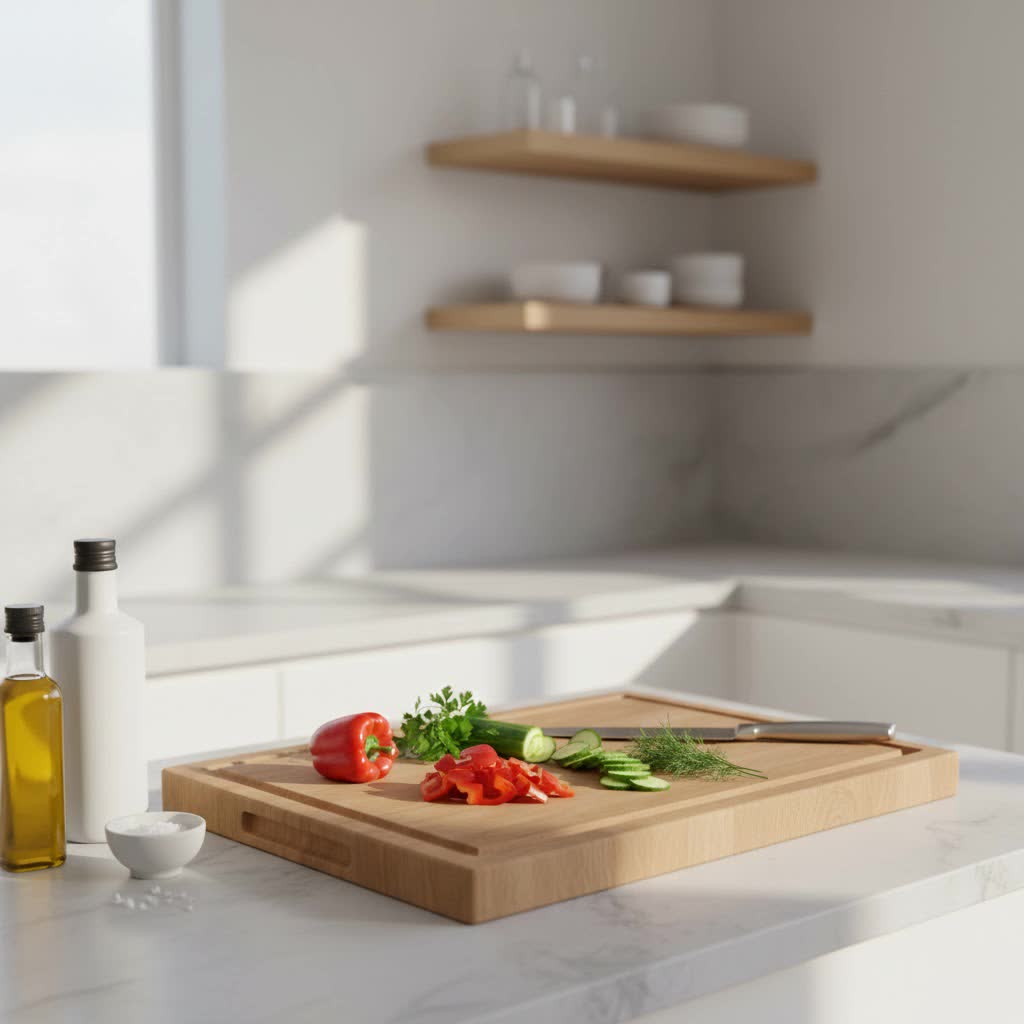
Unveiling the Ironwood Gourmet Acacia End-Grain Cutting Board
The Ironwood Gourmet Acacia Wood End Grain Cutting Board distinguishes itself with a blend of natural beauty and thoughtful engineering. Crafted from sustainably harvested acacia wood, known for its rich, shimmering hues and distinct grain patterns, this board is as much a display piece as it is a workhorse. The “end grain” construction is a critical feature, meaning the wood fibers are oriented vertically, like the ends of a tree trunk. This design allows knife blades to glide between the fibers, rather than cutting across them, which can significantly reduce wear and tear on your precious cutlery. This self-healing property of end-grain boards also means the board itself is more resistant to deep scratches and gouges compared to edge-grain alternatives.
Beyond its core construction, the Ironwood Gourmet board often incorporates practical design elements. Many models feature convenient rubber feet for stability, preventing unwanted slipping on your countertop during vigorous chopping. Some also include a perimeter juice groove, a valuable addition for catching liquids when slicing juicy fruits, vegetables, or carving meats, keeping your workspace cleaner and more organized. Its substantial yet manageable weight makes it a versatile tool for various kitchen tasks, from preparing ingredients to serving charcuterie.
Performance and Durability: Putting the Board to the Test
When it comes to performance, the Ironwood Gourmet Acacia Wood End Grain board generally excels in several key areas. Its end-grain surface provides an excellent platform for cutting, offering a satisfying feel under the knife. The inherent resilience of the end-grain structure protects knife edges, helping them retain their sharpness longer. While acacia wood, compared to some other hardwoods like maple or walnut, contains more silica which can theoretically be harder on knives, rigorous testing has shown that this specific board does not readily dull a chef’s knife even after extensive use.
The board’s durability, however, is directly tied to diligent care. Users frequently praise its sturdy construction and beautiful appearance, noting its ability to withstand regular daily chopping, dicing, and mincing. Its lighter weight, relative to some denser butcher blocks, also makes it easier to maneuver for cleaning and storage. However, without proper maintenance, this board, like any wooden cutting board, can be susceptible to common issues such as warping, cracking, or developing a rough surface. The beauty and longevity of acacia wood depend heavily on consistent care routines.
Acacia Wood: Pros and Cons in a Cutting Board
Acacia wood has become an increasingly popular choice for kitchenware, and for good reason. Understanding its inherent characteristics is key to appreciating the Ironwood Gourmet board.
Advantages of Acacia Wood
|
Our Picks for the Best Wooden cutting board in 2026
As an Amazon Associate I earn from qualifying purchases.
|
||
| Num | Product | Action |
|---|---|---|
| 1 | Greener Chef Luxury XL Bamboo Cutting Board Set of 3 with Vertical Grain Strength Technology - Extra Large Wood Cutting Boards for Kitchen and Lightweight Chopping Board Set - Replacements for Life |

|
| 2 | 3-Piece Set Bamboo Cutting Board for Kitchen - Crack-Resistant Wood Chopping Boards with Deep Juice Grooves, Pre-Oiled Butcher Block for Meat, Vegetables & Cheese, Carbonized |
|
| 3 | Bamboo Cutting Board for Kitchen, 18" Large Wood Charcuterie Cheese Board, Wooden Chopping Block with Side Handles and Juice Grooves |
|
| 4 | Premium Cutting Board Set – Non-Toxic Carbonized Bamboo & Wooden Cutting Boards for Kitchen Meal Prep, Durable Butcher Block for Meat with Side Handles, Juice Groove, Charcuterie & Chopping (3 Pcs) |
|
| 5 | Astercook Deep-Carbonized Bamboo Cutting Boards for Kitchen with Wood Storage Stand, Reversible Charcuterie & Chopping Boards with Juice Grooves and Easy-Grip Handles, Knife-Friendly, Kitchen Gift |
|
| 6 | Allsum Bamboo Wood Cutting Board for Kitchen, 1" Thick Butcher Block, Cheese Charcuterie Board, with Side Handles and Juice Grooves, 16x11" |
|
| 7 | Keechee Bamboo Cutting Board, Durable Wood Cutting Boards for Kitchen with Deep Juice Grooves & Built-in Handles, Ideal Charcuterie & Chopping for Meat, Vegetables and Fruits Ideal Kitchen Gifts |
|
| 8 | Freshware Bamboo Cutting Board Set of 3, Wooden Cutting Boards for Kitchen, Knife Friendly Food Grade Chopping Board, Lightweight with Hanging Hole for Easy Storage |
|
| 9 | Extra Large Cutting Board, 17.6" Bamboo Cutting Boards for Kitchen with Juice Groove and Handles Kitchen Chopping Board for Meat Cheese board Heavy Duty Serving Tray, XL, Empune |
|
| 10 | Kikcoin 17”×11” Bamboo Cutting Boards for Kitchen, Healthy Wooden Cutting Boards for Kitchen, Charcuterie, Vegetables, Cheese, Extra Large Chopping Boards with Deep Juice Groove and Handle, Natural |
|
Acacia wood offers a compelling array of benefits that make it suitable for cutting boards. Its striking, often variegated grain patterns and rich, warm tones contribute significantly to kitchen aesthetics, doubling as elegant serving platters. Beyond beauty, acacia possesses natural antimicrobial properties, which can contribute to a more hygienic food preparation surface. Its dense, closed-grain structure also helps it resist absorbing odors, keeping your kitchen smelling fresh. Furthermore, Ironwood Gourmet emphasizes using sustainably harvested acacia from Thailand, often with a commitment to environmental responsibility, making it an eco-friendlier choice.
Disadvantages of Acacia Wood
Despite its many virtues, acacia wood does come with certain considerations. As mentioned, its natural hardness and silica content mean it can be marginally tougher on knife edges compared to softer woods like walnut, though this difference may not be significant in daily use. The sleek and dense surface, while beautiful, may also show minor scratches more readily. The most significant drawback, often highlighted by user experiences, is its susceptibility to drying out and cracking or warping if not conditioned regularly. This necessitates a committed maintenance schedule, which can be a deterrent for some users.
“A well-maintained acacia end-grain board offers unparalleled aesthetics and knife protection. The trick is consistency in care.” – Chef Antoine Dubois, Culinary Instructor
Masterful Maintenance: Ensuring Your Board Lasts a Lifetime
The longevity and pristine condition of your Ironwood Gourmet Acacia Wood End Grain Cutting Board hinge entirely on consistent and correct care. Neglecting maintenance is the quickest way to diminish its beauty and structural integrity.
Daily Cleaning Ritual
After each use, immediately clean your wooden cutting board by hand. Use warm water and a mild dish soap, scrubbing gently with a soft sponge or brush to remove food particles. It’s crucial to wipe away any excess water with a clean towel promptly. Once cleaned, allow the board to air dry completely, ideally standing on its edge to ensure even air circulation around all surfaces and prevent moisture from pooling. This board, like all quality wooden cutting boards, is absolutely not dishwasher safe and should never be submerged in water for extended periods, as this can cause irreversible warping and cracking.
The Art of Oiling and Conditioning
Regular oiling is the secret to preventing your acacia cutting board from drying out, cracking, and losing its vibrant luster. When you first receive your Ironwood Gourmet board, it’s recommended to “season” it by applying food-grade mineral oil or a specialized butcher block oil daily for the first week. This initial intensive oiling helps saturate the wood fibers. Afterward, maintain this regimen by oiling the board at least once a month for the first year, and then quarterly or semi-annually, depending on usage and your climate. Always apply the oil liberally, allowing it to soak in for several hours or overnight before wiping off any excess. Avoid using edible oils like olive or canola, as these can go rancid over time, imparting unpleasant odors and potentially fostering bacterial growth. For an added layer of protection and a smoother finish, consider applying a wood conditioner (often a blend of mineral oil and beeswax) after the oil has fully absorbed.
Ironwood Gourmet vs. The Competition: A Quick Comparison
When considering the Ironwood Gourmet Acacia Wood End Grain board, it’s helpful to see how it stacks up against other popular cutting board materials and constructions.
| Feature | Ironwood Gourmet Acacia End-Grain | Maple End-Grain | Walnut End-Grain | Bamboo | Plastic (HDPE) |
|---|---|---|---|---|---|
| Durability | High (with care), resistant to knife marks | Very High, exceptionally hard and durable | High, excellent durability | Moderate, can split/delaminate | High, but shows cuts easily |
| Knife-Friendly | Very Good (end-grain design) | Excellent (gentle on edges) | Excellent (very gentle on edges) | Poor (very hard, dulls knives quickly) | Poor (very hard, dulls knives quickly) |
| Aesthetics | High (rich, varied grain) | Moderate (lighter, uniform grain) | High (dark, luxurious grain) | Moderate (distinctive, linear grain) | Low (utilitarian) |
| Antimicrobial | Natural properties | Natural properties | Natural properties | Natural properties | None |
| Maintenance | High (regular oiling, hand wash) | High (regular oiling, hand wash) | High (regular oiling, hand wash) | Moderate (oiling recommended, hand wash) | Low (dishwasher safe) |
| Price | Mid-range for end-grain | High-end | High-end | Low | Very Low |
| Weight | Moderate (often lighter than other woods) | Heavy | Heavy | Lightweight | Lightweight |
| Warping/Cracking | Susceptible if neglected | Less susceptible (very stable) | Less susceptible (stable) | Susceptible to delamination | Impervious |
The Ironwood Gourmet board often strikes an attractive balance, offering the premium benefits of end-grain construction and the beauty of acacia wood at a more accessible price point compared to some maple or walnut counterparts. While bamboo is cheaper, it’s notoriously hard on knives. Plastic is convenient but lacks the aesthetic and knife-preserving qualities of wood.
Is the Ironwood Gourmet Acacia End-Grain Board Right for You? (Buying Guide)
Choosing the perfect wooden cutting board involves weighing your needs, preferences, and willingness to commit to care. The Ironwood Gourmet Acacia Wood End Grain Cutting Board is an excellent choice for individuals who:
- Prioritize Aesthetics: Its beautiful, dynamic acacia grain adds a sophisticated touch to any kitchen.
- Seek Knife Protection: The end-grain construction is a significant benefit for maintaining sharp knife edges.
- Are Budget-Conscious for End-Grain: It offers the advantages of an end-grain board without the top-tier price tag of some other hardwoods.
- Are Committed to Maintenance: You must be prepared for regular hand washing and consistent oiling to ensure its longevity.
- Desire Versatility: It’s equally adept at food prep and serving.
Before purchasing, consider the specific size you need to accommodate your typical food prep and available counter space. Look for reputable retailers and compare prices, keeping an eye out for sales. If you’re someone who prefers minimal maintenance or frequently uses a dishwasher for all kitchen tools, a wooden cutting board, including this one, might not be your ideal choice.
Conclusion
The Ironwood Gourmet Acacia Wood End Grain Cutting Board presents a compelling option for anyone seeking a blend of beauty, performance, and value in their kitchen. Its stunning acacia wood, combined with the knife-friendly and self-healing properties of end-grain construction, makes it a joy to use. While it demands a commitment to proper care—specifically, regular oiling and diligent hand washing—this investment ensures a durable and attractive culinary companion for many years. When properly maintained, it stands as a testament to the fact that functionality and elegance can coexist harmoniously in your kitchen. Are you ready to embrace the art of wooden cutting board care and elevate your cooking experience?
Frequently Asked Questions
How often should I oil my Ironwood Gourmet Acacia Wood End Grain cutting board?
Initially, oil your new board daily for the first week to season it. After seasoning, apply food-grade mineral oil monthly for the first year, then at least annually, or more frequently if it appears dry or dull. Consistent oiling is crucial to prevent cracking and maintain its luster.
Can I put my Ironwood Gourmet cutting board in the dishwasher?
No, absolutely not. Wooden cutting boards, especially end-grain ones, should never be placed in a dishwasher or submerged in water. The intense heat, harsh detergents, and prolonged moisture will cause the wood to warp, crack, and potentially delaminate, voiding any warranty and destroying the board.
Is acacia wood hard on knives compared to other woods?
Acacia wood is generally harder than woods like walnut or cherry, and sometimes maple, due to its density and natural silica content. While some sources suggest this might make it slightly tougher on knives, the end-grain construction of the Ironwood Gourmet board significantly mitigates this by allowing knife blades to slip between the wood fibers, preserving knife edges effectively.
What should I do if my Ironwood Gourmet cutting board starts to warp or crack?
Warping or cracking usually indicates a lack of proper care, often due to excessive moisture or insufficient oiling. Minor warping might be corrected by oiling the concave side more heavily and letting it dry slowly. For cracks, deep conditioning with mineral oil and possibly a wood filler might help, but severe damage may be irreversible. Preventative care is key.