There’s little more frustrating in the kitchen than reaching for your trusty wooden cutting board, only to find it wobbling and unstable. A warped cutting board not only makes chopping awkward and unsafe but can also feel like a personal betrayal from a beloved kitchen tool. While many assume a warped board is destined for the bin, the good news is that most mild to moderate warps are entirely fixable right at home, and you can often start the repair process overnight.
This comprehensive guide will walk you through understanding why your boards warp, preparing them for repair, and step-by-step methods to get them back to their flat, functional best – often beginning their recovery in just a few hours.
Understanding Why Your Wooden Cutting Board Warps
At its core, wood warping is a moisture problem. Wood is a hygroscopic material, meaning it constantly exchanges moisture with its surrounding environment. When one side of a wooden cutting board absorbs or loses moisture at a different rate than the other, the wood fibers expand or contract unevenly, leading to a bend or “cup.”
Common Culprits Behind Warping:
- Dishwashers: The intense heat, harsh detergents, and prolonged exposure to water in a dishwasher are a recipe for disaster for wooden boards. They strip natural oils and cause rapid, uneven moisture changes.
- Improper Washing and Drying: Leaving one side of the board wet for an extended period, or standing it upright against a hot oven or radiator, can cause one side to dry much faster than the other, initiating a warp. Soaking your board in water for too long can also contribute.
- Inconsistent Oiling/Conditioning: Regular oiling creates a barrier that helps stabilize the wood’s moisture content. Without it, the wood is more susceptible to environmental changes.
- Environmental Factors: Even perfectly cared-for boards can develop a slight warp over time due to fluctuating humidity and temperature in your kitchen or storage area.
Preparing Your Warped Cutting Board for Repair
Before attempting any repair, a little preparation goes a long way.
- Assess the Warp: Place your board on a flat countertop. Identify which way it’s cupping. The “convex” side is the one bowed up (like a smile), and the “concave” side is the one cupped down (like a frown). Most repair methods focus on adding moisture to the concave side or drying the convex side while applying pressure.
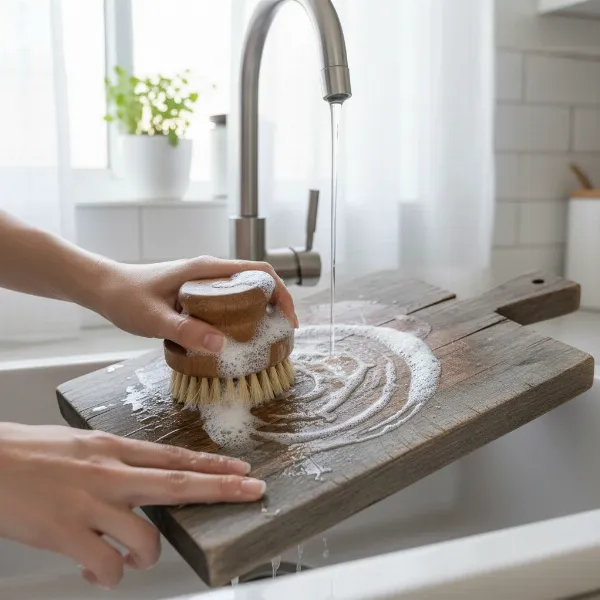
- Clean the Board Thoroughly: Ensure your cutting board is free of any food debris, grease, or grime. Use warm water and mild dish soap, scrubbing both sides evenly, then rinse and dry as best you can before starting the repair process.
Overnight Solutions to Fix Your Warped Cutting Board
While achieving a perfectly flat board “overnight” is ambitious, these methods can significantly improve a warp, with the main work happening while you sleep. Full stabilization might take a bit longer, but you’ll see progress.
Method 1: The Water and Weight Technique
This is often the most effective method for tackling more significant warps, allowing moisture to penetrate deep into the wood fibers.
What You’ll Need:
- Hot water (enough to submerge the board or heavily wet one side)
- A large, flat, sturdy surface (e.g., a kitchen counter, workbench)
- Heavy, flat objects (e.g., a stack of books, concrete pavers, a cooler full of water, another heavy cutting board, wood clamps)
- Optional: A large towel or plastic sheeting to protect your surface.
|
Our Picks for the Best Wooden cutting board in 2026
As an Amazon Associate I earn from qualifying purchases.
|
||
| Num | Product | Action |
|---|---|---|
| 1 | Extra Large Cutting Board, 17.6" Bamboo Cutting Boards for Kitchen with Juice Groove and Handles Kitchen Chopping Board for Meat Cheese board Heavy Duty Serving Tray, XL, Empune |

|
| 2 | Allsum Bamboo Wood Cutting Board for Kitchen, 1" Thick Butcher Block, Cheese Charcuterie Board, with Side Handles and Juice Grooves, 16x11" |
|
| 3 | Keechee Bamboo Cutting Board, Durable Wood Cutting Boards for Kitchen with Deep Juice Grooves & Built-in Handles, Ideal Charcuterie & Chopping for Meat, Vegetables and Fruits Ideal Kitchen Gifts |
|
| 4 | Bamboo Cutting Board for Kitchen, 18" Large Wood Charcuterie Cheese Board, Wooden Chopping Block with Side Handles and Juice Grooves |
|
| 5 | Kikcoin 17”×11” Bamboo Cutting Boards for Kitchen, Healthy Wooden Cutting Boards for Kitchen, Charcuterie, Vegetables, Cheese, Extra Large Chopping Boards with Deep Juice Groove and Handle, Natural |
|
| 6 | 3-Piece Set Bamboo Cutting Board for Kitchen - Crack-Resistant Wood Chopping Boards with Deep Juice Grooves, Pre-Oiled Butcher Block for Meat, Vegetables & Cheese, Carbonized |
|
| 7 | Astercook Deep-Carbonized Bamboo Cutting Boards for Kitchen with Wood Storage Stand, Reversible Charcuterie & Chopping Boards with Juice Grooves and Easy-Grip Handles, Knife-Friendly, Kitchen Gift |
|
| 8 | Freshware Bamboo Cutting Board Set of 3, Wooden Cutting Boards for Kitchen, Knife Friendly Food Grade Chopping Board, Lightweight with Hanging Hole for Easy Storage |
|
| 9 | Greener Chef Luxury XL Bamboo Cutting Board Set of 3 with Vertical Grain Strength Technology - Extra Large Wood Cutting Boards for Kitchen and Lightweight Chopping Board Set - Replacements for Life |
|
| 10 | Premium Cutting Board Set – Non-Toxic Carbonized Bamboo & Wooden Cutting Boards for Kitchen Meal Prep, Durable Butcher Block for Meat with Side Handles, Juice Groove, Charcuterie & Chopping (3 Pcs) |
|
Step-by-Step Instructions:
- Reintroduce Moisture: For deeply warped boards, consider soaking the entire board in a bucket or tub of hot water for a few hours. For thicker boards or less severe warps, you can simply lay the board with its concave (cupped in) side facing up and pour hot water generously over that side, letting it soak in. Alternatively, place wet towels covering the concave side. The goal is to make the wood fibers on that side expand and become pliable.
- Position the Board: After wetting, place the cutting board on your flat, sturdy surface with the convex (bowed up) side facing down.
- Apply Pressure: Place a flat, rigid object (like a baking sheet, another piece of wood, or a cutting board) over the top of your warped board. Then, stack your heavy objects evenly on top of this flat surface, ensuring pressure is distributed across the entire board. If you have woodworking clamps, you can use them to apply direct, strong pressure.
- Wait Overnight (and Beyond): Leave the board under pressure overnight. The moisture will help the wood fibers relax and conform to the flat surface under the weight. While you’ll see improvement by morning, for the wood to truly “reset its memory” and fully dry in its new flat shape, you might need to leave it under pressure for 2-3 days, or even up to a week, especially for thicker boards.
How it Works: This technique leverages the principle that wood fibers become more flexible when moist. By re-wetting the contracted side and applying significant pressure, you’re essentially forcing the wood back into a flat orientation as it slowly dries.
Tips: If you’re short on time, placing a fan to gently blow air over the board (while still under weight) can help accelerate the drying process, but ensure even drying to prevent re-warping.
Method 2: The Iron and Damp Towel Trick
This method is best suited for milder warps and offers a quicker, more targeted application of moisture and heat.
What You’ll Need:
- An iron with a steam setting
- A damp (not dripping wet) kitchen towel
- A flat, heat-resistant surface
- Gloves (optional, for handling a hot iron)
Step-by-Step Instructions:
- Position the Board: Lay your warped cutting board on a flat, heat-resistant surface with the warped side facing up.
- Cover with Damp Towel: Place the damp towel directly over the warped area of the cutting board.
- Iron with Steam: Turn your iron to a medium-to-high setting (suitable for cotton, with steam). Begin ironing the damp towel, applying firm pressure and using the steam function liberally. Move the iron slowly and steadily across the entire warped area. The goal is to introduce steam and heat into the contracted wood fibers, making them expand and soften.
- Check Progress: Lift the towel periodically to check the board’s flatness. Repeat the ironing process as needed, re-dampening the towel if it dries out. Continue until the board visibly flattens.
- Cool and Dry Under Pressure: Once flat, immediately place the board under heavy weights on a flat surface (similar to Method 1) to ensure it dries flat. This step is crucial to prevent the board from re-warping as it cools.
How it Works: The combination of heat, moisture (steam), and direct pressure from the iron makes the wood fibers pliable and allows them to be reshaped.
Caution: This method can potentially cause cracking if the wood is very dry or if excessive heat is applied for too long. Monitor the board closely and avoid direct contact of the hot iron with the wood.
Method 3: Targeted Wetting (Simple & Gentle)
For very slight warps, sometimes a minimal, targeted approach is all that’s needed to restore balance.
What You’ll Need:
- A wet sponge
- A flat surface
Step-by-Step Instructions:
- Identify the Concave Side: As with other methods, determine the side of the board that is “cupped in.”
- Wipe the Concave Side: Take a thoroughly wet sponge and wipe only the concave side of the cutting board. Avoid wetting the convex side.
- Place Wet Side Down: Immediately place the cutting board on a flat kitchen worktop with the wet, concave side facing down.
- Leave and Repeat: Leave the board for an hour or so. The moisture will slowly absorb into the concave side, causing those fibers to expand and pushing the board flatter against the counter. Check the progress; if still warped, re-wet the concave side and repeat. This method is gentle and may require several repetitions over a day or two.
How it Works: This method works by rebalancing the moisture content. By adding moisture only to the drier, contracted concave side, those wood fibers expand, encouraging the board to flatten naturally.
When “Overnight” Isn’t Enough: Long-Term Flattening
While the initial steps in these methods can begin the flattening process overnight, true, lasting repair often requires more patience. Wood has a “memory,” and it needs time to fully dry and stabilize in its new, flat configuration.
- Sustained Pressure: After applying water and weight or the iron method, keeping the board under continuous heavy pressure for several days (2-7 days, depending on board thickness and warp severity) is critical. This ensures the wood dries completely flat and helps it “forget” its warped state.
- Fan Drying: Placing a fan near the weighted board can accelerate the drying process, but ensure the airflow is even across the board to prevent new moisture imbalances.
- Re-Oiling: Once the board is completely dry and flat, liberally re-oil both sides with food-grade mineral oil. This helps to recondition the wood, seal in moisture, and create a protective barrier against future warping.
Table: Comparison of Warped Cutting Board Repair Methods
| Method | Speed (Initial Effect) | Tools Needed | Best For | Risks |
|---|---|---|---|---|
| Water & Weight | Noticeable overnight | Water, weights, flat surface | Moderate to severe warps | Minimal |
| Iron & Damp Towel | A few hours | Iron, damp towel, flat surface | Mild warps | Cracking |
| Targeted Wetting | Hours to days | Sponge, water, flat surface | Mild warps, rebalancing moisture | Minimal |
Preventing Future Warping: Best Practices
Prevention is always better than cure. By adopting a few simple habits, you can significantly reduce the chances of your wooden cutting board warping again.
- Proper Washing & Drying: Always wash both sides of your cutting board equally with warm, soapy water. After washing, dry it immediately with a clean towel. Crucially, store it on its edge or flat to allow air circulation around all surfaces, promoting even drying. Avoid placing it flat on a wet counter or leaning it against a wall where one side gets air and the other doesn’t.
- Regular Oiling/Conditioning: Treat your cutting board regularly with food-grade mineral oil or a board butter. This keeps the wood hydrated, prevents it from drying out, and creates a barrier against moisture absorption. Aim for once a month, or more frequently if your board feels dry or after heavy use.
- Avoid Dishwashers & Soaking: Never, ever put a wooden cutting board in the dishwasher or leave it submerged in water. These are primary causes of warping and cracking.
- Mindful Storage: Store your cutting board away from extreme heat sources (like ovens or radiators) or areas with drastic temperature or humidity fluctuations. A dry, stable environment is ideal.
- Choosing the Right Board: While any wood can warp, end-grain cutting boards are often more resistant to warping due to their construction. Good quality boards, properly kiln-dried and seasoned, are also less prone to issues.
“Most chefs think that once a cutting board is warped that it’s irreparable. The truth is, depending on the severity of the warp, you may be able to fix it at home with a few simple methods.”
Conclusion
A warped wooden cutting board doesn’t have to be a lost cause. By understanding the underlying causes of warping and applying one of these effective repair techniques—especially the water and weight method which can begin its work overnight—you can often restore your board to its former glory. Remember that patience is key, as the wood needs time to fully dry and stabilize in its new, flat shape. More importantly, consistent preventative care through proper washing, drying, and regular oiling will ensure your wooden cutting boards remain flat, functional, and beautiful for years to come.
What’s your go-to method for keeping your boards flat?
Frequently Asked Questions
Can all warped wooden cutting boards be fixed?
Most mild to moderate warps can be effectively corrected using the methods described. However, severely warped boards with deep cracks or splits, or those made from very thin, low-quality wood, might be beyond simple home repair and may require professional woodworking or replacement.
How often should I oil my cutting board to prevent warping?
As a general rule, aim to oil your cutting board once a month. However, this can vary based on usage and climate. If your board feels dry to the touch, looks faded, or you wash it frequently, you might need to oil it more often. Use a food-grade mineral oil or a specific board conditioner.
Is soaking a cutting board bad?
Yes, prolonged soaking of a wooden cutting board is generally bad. It causes the wood to absorb water unevenly, leading to swelling, warping, and potentially cracking or splitting. While some repair methods involve controlled wetting, this is done briefly and followed immediately by flattening under pressure.
Why does my cutting board warp despite careful use?
Even with diligent care, wood naturally reacts to changes in its environment. Fluctuations in kitchen humidity and temperature can cause wood fibers to expand and contract. Inherent stresses within the wood grain, even in kiln-dried timber, can also contribute to a slight warp over time. Consistent moisture on both sides and proper storage are crucial in mitigating these natural tendencies.
How long does it actually take for a cutting board to flatten completely?
While initial visual improvement can often be seen overnight with methods like water and weight, full flattening and stabilization—where the wood truly “resets its memory” and dries completely in its flat form—typically requires 2-3 days, and sometimes up to a week, under consistent pressure and controlled drying conditions.