Imagine a material that could mend its own wounds, resist decay, and prolong its lifespan without constant human intervention. While it might sound like something from science fiction, wood, in its various forms, possesses truly remarkable “self-healing” properties. Far from being a static, inert substance, wood is a dynamic material with inherent biological defense mechanisms and is now inspiring cutting-edge engineered solutions that allow it to repair damage, offering a glimpse into a more sustainable future for building and design. Understanding the intricate science behind these capabilities reveals a world where resilience is built into the very fibers of our natural resources.

Defining “Self-Healing” in the World of Wood
When we talk about “self-healing” in wood, it’s essential to differentiate it from the rapid regeneration seen in human or animal tissue. Trees don’t grow back severed limbs or instantly close large gaps. Instead, wood’s self-healing encompasses a range of sophisticated biological defense strategies in living trees and, increasingly, ingenious biomimetic approaches in processed timber. These mechanisms work to prevent or limit damage, repair minor wear, and extend the material’s functional life, underscoring its profound resilience and inherent adaptability. This natural durability is a cornerstone of wood’s appeal, reducing the need for extensive maintenance and contributing to a healthier environment.
Nature’s Masterpiece: Self-Healing in Living Trees
Living trees are not passive victims of their environment; they are dynamic organisms equipped with an impressive array of defense and self-repair systems. These natural processes allow them to withstand injury, repel pathogens, and continue growing for centuries. The science behind this natural resilience is both complex and fascinating, a testament to evolution’s ingenuity.
Compartmentalization of Decay in Trees (CODIT)
Perhaps the most significant natural self-defense mechanism in living trees is a process known as Compartmentalization of Decay in Trees, or CODIT. Developed by Dr. Alex Shigo in the 1970s, CODIT describes how trees respond to injury by “walling off” damaged or infected areas rather than attempting to truly “heal” them in the conventional sense. This sophisticated system prevents the spread of decay and disease into healthy wood tissue.
The CODIT model is often visualized as four distinct “walls”:
- Wall 1: This initial barrier slows the vertical spread of decay within the tree’s vascular system, plugging the vessels above and below the wound. It is typically the weakest of the barriers.
- Wall 2: Located along the growth rings, this wall inhibits the inward spread of decay, preventing it from penetrating deeper into the tree’s core.
- Wall 3: Considered the strongest initial chemical barrier, this wall forms across the wood rays, halting the lateral spread of decay around the circumference of the stem. It often involves the production of specialized chemical compounds that create a toxic environment for pathogens.
- Wall 4: This is the strongest barrier of all, formed by new wood tissue (often called “woundwood”) that grows after the injury. This new growth effectively seals off the wounded area from subsequent growth rings, encasing the damaged section and preventing its spread into future growth.
|
Our Picks for the Best Wooden cutting board in 2026
As an Amazon Associate I earn from qualifying purchases.
|
||
| Num | Product | Action |
|---|---|---|
| 1 | Greener Chef Luxury XL Bamboo Cutting Board Set of 3 with Vertical Grain Strength Technology - Extra Large Wood Cutting Boards for Kitchen and Lightweight Chopping Board Set - Replacements for Life |

|
| 2 | Bamboo Cutting Board for Kitchen, 18" Large Wood Charcuterie Cheese Board, Wooden Chopping Block with Side Handles and Juice Grooves |
|
| 3 | Keechee Bamboo Cutting Board, Durable Wood Cutting Boards for Kitchen with Deep Juice Grooves & Built-in Handles, Ideal Charcuterie & Chopping for Meat, Vegetables and Fruits Ideal Kitchen Gifts |
|
| 4 | Freshware Bamboo Cutting Board Set of 3, Wooden Cutting Boards for Kitchen, Knife Friendly Food Grade Chopping Board, Lightweight with Hanging Hole for Easy Storage |
|
| 5 | Premium Cutting Board Set – Non-Toxic Carbonized Bamboo & Wooden Cutting Boards for Kitchen Meal Prep, Durable Butcher Block for Meat with Side Handles, Juice Groove, Charcuterie & Chopping (3 Pcs) |
|
| 6 | Extra Large Cutting Board, 17.6" Bamboo Cutting Boards for Kitchen with Juice Groove and Handles Kitchen Chopping Board for Meat Cheese board Heavy Duty Serving Tray, XL, Empune |
|
| 7 | Allsum Bamboo Wood Cutting Board for Kitchen, 1" Thick Butcher Block, Cheese Charcuterie Board, with Side Handles and Juice Grooves, 16x11" |
|
| 8 | Astercook Deep-Carbonized Bamboo Cutting Boards for Kitchen with Wood Storage Stand, Reversible Charcuterie & Chopping Boards with Juice Grooves and Easy-Grip Handles, Knife-Friendly, Kitchen Gift |
|
| 9 | Kikcoin 17”×11” Bamboo Cutting Boards for Kitchen, Healthy Wooden Cutting Boards for Kitchen, Charcuterie, Vegetables, Cheese, Extra Large Chopping Boards with Deep Juice Groove and Handle, Natural |
|
| 10 | 3-Piece Set Bamboo Cutting Board for Kitchen - Crack-Resistant Wood Chopping Boards with Deep Juice Grooves, Pre-Oiled Butcher Block for Meat, Vegetables & Cheese, Carbonized |
|
Through these combined physical and chemical barriers, trees can effectively isolate damaged areas, preventing systemic infection and maintaining their structural integrity for long periods.
Sap Exudation and Wound Periderm Formation
Another rapid response in living trees involves the exudation of saps. When a tree sustains a wound, it can quickly discharge various plant saps such as resin, latex, or mucilage. These sticky substances act as a natural bandage, physically filling and sealing the gap, and forming a protective layer over the injury. This immediate “self-sealing” prevents further moisture loss and acts as a barrier against invading fungi, bacteria, and insects.
Following this initial sealing, a slower, more profound healing process begins. The tree’s cambium layer, located just beneath the bark, starts to produce specialized cells that form callus tissue. This callus then develops into a wound periderm, creating a new, protective bark-like layer that grows over the injured site. This process of tissue regeneration gradually covers the wound, restoring the tree’s protective outer layer and safeguarding its internal structures.
Innate Chemical Defenses
Beyond physical barriers, wood possesses an inherent chemical arsenal. Many wood species naturally produce a variety of extractive compounds—such as tannins, polyphenols, and terpenes—that are deposited within the wood cells. These chemicals serve as potent antifungal and antibacterial agents, creating an environment inhospitable to decay-causing organisms. This natural chemical resistance plays a crucial role in preventing microbial attack and limiting the spread of rot, even in harvested timber, contributing to the renowned durability of species like oak or cedar.
The Dawn of Engineered Self-Healing Wood
While natural wood possesses incredible self-defense mechanisms, harvested timber loses the active biological processes of a living tree. However, scientists are increasingly drawing inspiration from nature, a concept known as biomimicry, to engineer wood-based materials that can actively repair themselves. These innovations are paving the way for more resilient, sustainable, and longer-lasting wood products.
Microbe-Infused “Living” Wood
One of the most exciting advancements in engineered wood involves infusing timber with beneficial microbes. Researchers at institutions like Purdue and Michigan State Universities are developing “living” wood by introducing specific microorganisms into the porous network of wood. These microbes are engineered to consume carbon dioxide from the atmosphere and convert it into tough biomaterials that then fill the wood’s pores.
This process not only enhances the mechanical strength and flame resistance of the wood but can also actively repair damage sustained over its lifetime. The concept is inspired by natural phenomena where certain microbes already contribute to hardening wood in living trees, sometimes giving it an elegant dark color, as seen in traditional applications in Japan and China. This bio-inspired approach holds immense promise for creating environmentally friendly and self-repairing building materials.
Microcapsules and Shape-Memory Polymers
Another innovative strategy involves embedding self-healing agents within the wood structure. This often takes the form of microscopic capsules filled with reactive resins or polymers. When the wood experiences damage, such as a crack or a scratch, these microcapsules rupture, releasing the healing agent into the compromised area. The agent then polymerizes, effectively filling the gap and bonding the wood fibers back together, restoring both the aesthetic appearance and, to some extent, the mechanical properties of the material.
Similarly, shape-memory polymers are being explored for their ability to react to external stimuli. These polymers can be programmed to “remember” an original shape and, when triggered by factors like heat or moisture, can recover that shape, thereby closing cracks or indentations in the wood. This technology offers a pathway to wood products that can dynamically respond to and repair minor forms of wear and tear.
Self-Healing Biofilm Coatings
Beyond modifying the internal structure of wood, innovative coatings are also being developed. Biofilm coatings, for instance, utilize living microorganisms like the fungus Aureobasidium pullulans. This fungus forms a protective layer on wood surfaces, not only shielding it from deterioration caused by other decaying fungi and UV radiation but also exhibiting a “remarkable self-healing ability” to repair minor damages to the coating itself. These bio-inspired finishes offer a sustainable and effective way to enhance wood’s external durability and longevity.
The Underlying Science: How Wood Achieves Resilience
The ability of wood to exhibit self-healing properties, whether naturally or through engineering, is rooted in its fundamental cellular structure and chemical composition, coupled with its interaction with the environment.
Cellular Structure and Chemical Composition
Wood is primarily composed of three organic polymers:
- Cellulose: Provides the main structural framework, giving wood its strength and rigidity.
- Hemicellulose: Acts as a binding agent, gluing cellulose fibers and lignin together. It is also particularly sensitive to moisture, playing a role in the hygromechanical behavior of wood.
- Lignin: A complex polymer that provides stiffness, compressive strength, and acts as a protective matrix, making wood resistant to biological degradation and largely hydration independent.
In living trees, the dynamic interplay of these components, along with living parenchyma cells, cambium, and the tree’s metabolic processes, enables natural defense mechanisms. For engineered solutions, the inherent porosity and chemical nature of these polymers allow for the integration of healing agents or microbes, leveraging wood’s existing architecture.
The Role of Moisture and Environmental Triggers
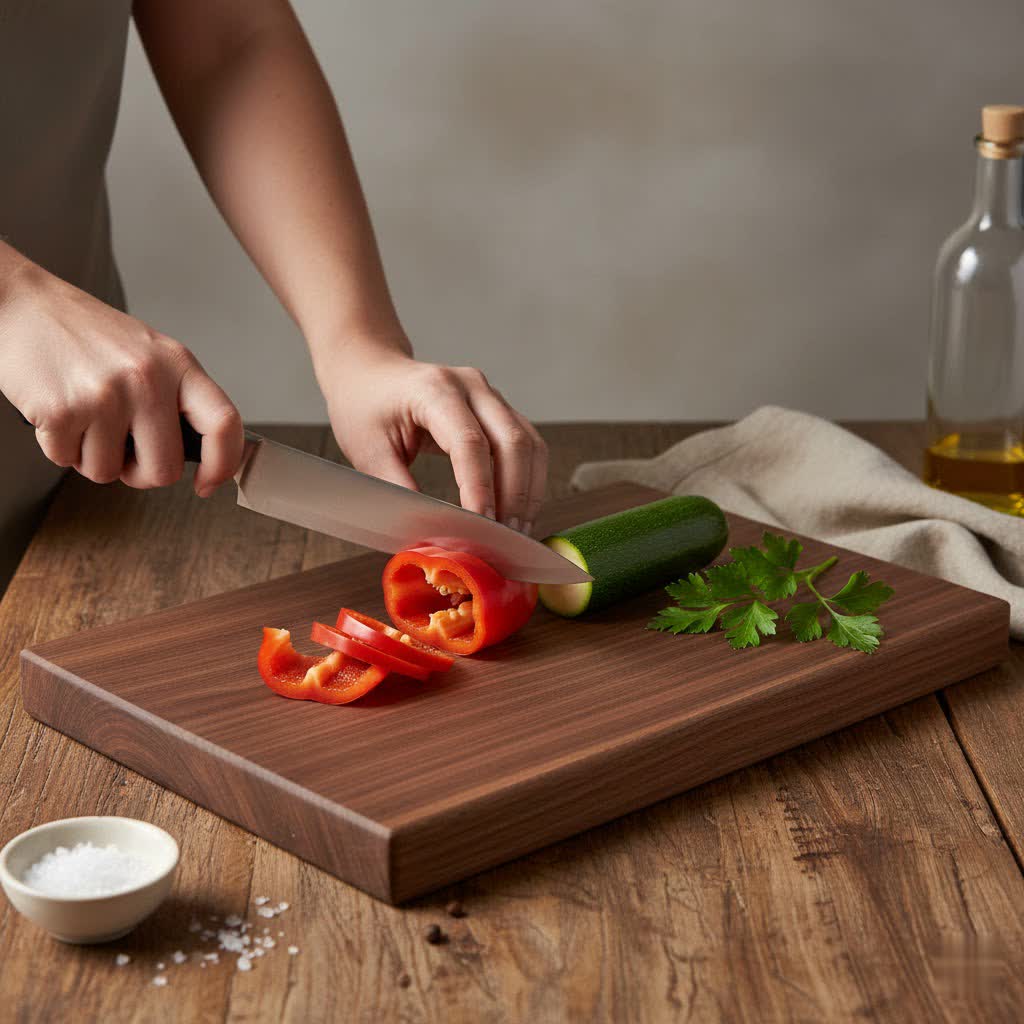
Moisture is a critical factor in both natural wood’s behavior and engineered self-healing. Wood is a hygroscopic material, meaning it absorbs and releases moisture, causing it to swell and shrink. In the context of minor surface damage, such as shallow knife marks on a wooden cutting board, the absorption of water can cause wood fibers to swell, effectively reducing the visibility of these imperfections.
For engineered self-healing materials, moisture, heat, or light can act as vital triggers. Embedded microcapsules or shape-memory polymers can be designed to rupture or activate when exposed to specific environmental conditions, initiating the repair process precisely when and where damage occurs. The natural capillary action within wood’s vessel and fiber tracheid networks can also be bio-inspired to facilitate the distribution of chemical treatments, improving penetration and uniformity.
Impact and Future Prospects of Self-Healing Wood
The science of wood’s self-healing capabilities holds immense promise for a more sustainable future. By extending the lifespan of wood products, we can significantly reduce waste and the demand for new resources. These innovations contribute to sustainable construction practices, minimize maintenance costs, and open doors for wood to be used in new, challenging applications where durability and resilience are paramount.
Ongoing research continues to explore ways to enhance these properties, from optimizing microbial interactions to designing more efficient encapsulated healing systems. As our understanding of wood’s complex biology and chemistry deepens, the potential for truly regenerative wood materials becomes an increasingly tangible reality.
Conclusion
From the ancient forests to advanced material science laboratories, wood consistently demonstrates a remarkable capacity for resilience and repair. The natural self-defense strategies of living trees, particularly the ingenious system of Compartmentalization of Decay in Trees, have allowed them to thrive for millennia. Now, inspired by these very biological marvels, scientists are unlocking the secrets to engineer self-healing properties into harvested wood, creating innovative materials that promise extended lifespans and reduced environmental impact. As we embrace these scientific advancements, we are moving towards a future where wood, a material cherished for its timeless beauty, is also celebrated for its enduring capacity to restore itself.
What innovations in self-healing materials do you find most fascinating?
Frequently Asked Questions
Does wood truly “heal” like human skin?
No, wood does not “heal” in the same way human skin regenerates. Instead, living trees employ a process called Compartmentalization of Decay in Trees (CODIT), where they create physical and chemical barriers to wall off damaged or infected areas, preventing the spread of decay rather than repairing the damaged tissue itself. Engineered self-healing wood, however, can mimic repair through chemical reactions.
Can my wooden furniture or cutting board self-heal?
While wooden items like cutting boards can exhibit minor self-repair for superficial scratches due to moisture absorption causing wood fibers to swell and reduce the visibility of marks, they do not possess the advanced biological or engineered self-healing capabilities discussed for living trees or future materials. Proper maintenance, like oiling, helps preserve them.
What are the main types of wood self-healing?
There are two primary categories: natural biological self-defense mechanisms in living trees (like CODIT, sap exudation, and innate chemical resistance) and engineered self-healing solutions in processed wood (such as microbe-infused “living” wood, materials with encapsulated healing agents, and self-healing biofilm coatings).
How long does self-healing take in wood?
Natural self-sealing in living trees, such as sap exudation, can happen within minutes. The more complex process of wound periderm formation and compartmentalization takes days, weeks, or even years for new wood to grow over a wound. Engineered self-healing systems are designed for varied timelines, from rapid crack filling to slower, ongoing microbial processes, depending on the specific technology.