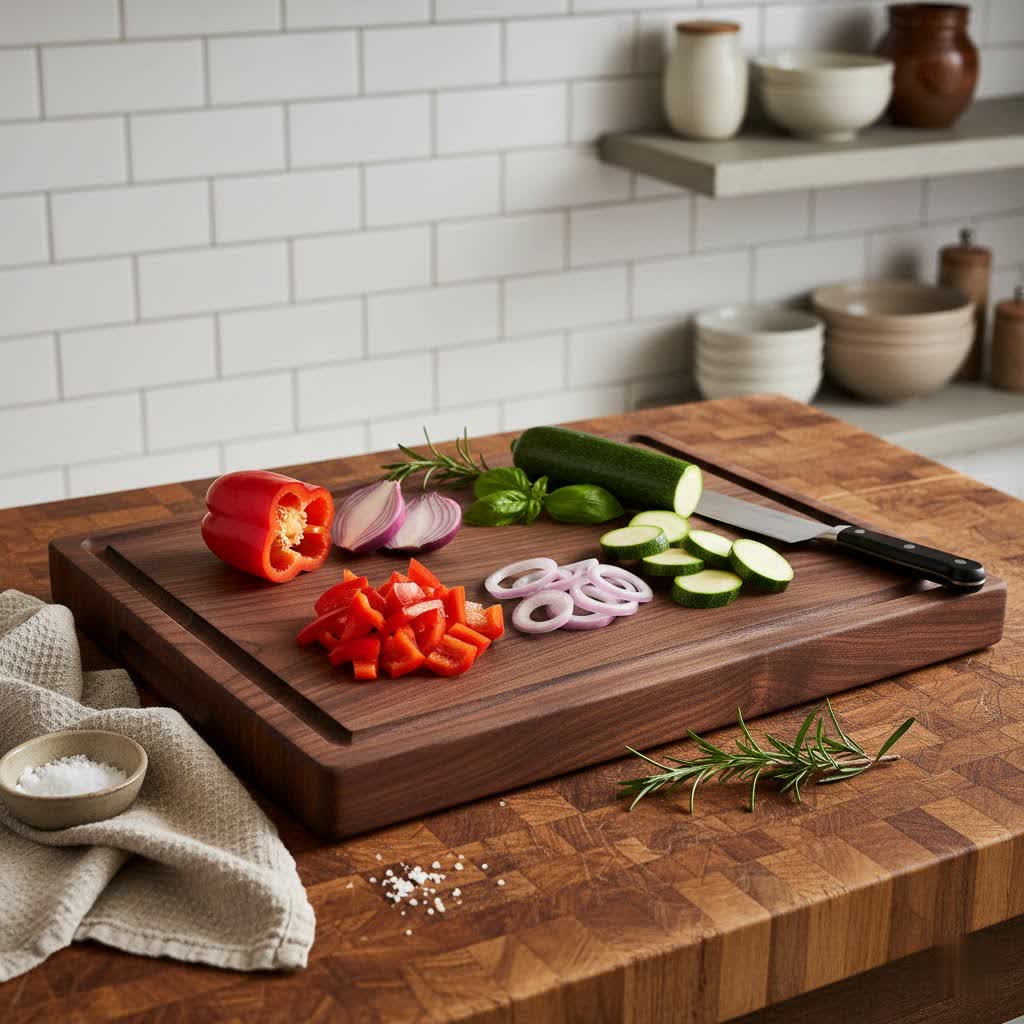
A high-quality cutting board is the unsung hero of any kitchen, a silent partner in countless culinary creations. Among the myriad options available, wooden cutting boards have long been cherished for their aesthetic appeal and functional advantages. But with so many types and brands, how do you choose the right one? Today, we delve into a specific contender: the Proteak Teak Cutting Board, focusing on its edge grain construction. Is this board the workhorse your kitchen deserves, or are there caveats to consider? Let’s slice through the details to find out.
Understanding Wooden Cutting Boards
Wooden cutting boards have graced kitchens for centuries, evolving from simple slabs of timber to sophisticated culinary tools. They offer a warm, natural aesthetic that synthetic alternatives often lack, transforming a utilitarian object into a piece of kitchen decor. Historically, wood was chosen for its readily available nature and natural resilience, a tradition that continues with modern advancements in wood processing and board construction.
Various wood species are employed in cutting board manufacturing, each bringing unique properties to the table. From the dense, closed-grain structure of maple to the rich hues of walnut, the choice of wood impacts durability, knife-friendliness, and maintenance. Teak, specifically, stands out as a premium hardwood. Renowned for its exceptional durability and natural resistance to moisture and decay, teak has become a popular choice for high-end kitchenware. Its inherent oils not only contribute to its longevity but also give it a distinct, luxurious feel.
Proteak Teak Cutting Board (Edge Grain) Overview
The Proteak Teak Cutting Board, in its edge grain configuration, is crafted by laminating long strips of teak wood side by side. This construction method results in a surface where the wood fibers run parallel to the cutting surface. Proteak, often associated with the Teakhaus brand, sources its teak responsibly, emphasizing sustainability in its production process.
Visually, these boards are striking. Teak’s beautiful golden-brown tones, often interwoven with darker streaks, create a captivating pattern that can elevate any kitchen countertop. Available in various sizes, from compact prep boards to substantial butcher blocks, the dimensions typically range, but many popular models offer ample space for daily meal preparation, such as a generous 24x18x1.5 inches. Upon first impression, the Proteak board feels substantial and well-made, possessing a reassuring weight that promises stability during vigorous chopping tasks.
Advantages of the Proteak Edge Grain Teak Board
One of the most immediate benefits of a Proteak Teak Edge Grain board is its striking aesthetic appeal. The rich, varied grain patterns and warm color of teak impart an inviting, sophisticated look to any kitchen. It’s more than just a tool; it’s a statement piece that enhances the overall ambiance.
Beyond its beauty, teak is celebrated for its remarkable durability. Thanks to its naturally oily resins, teak is inherently resistant to warping, cracking, and staining, issues that often plague lesser woods. These natural oils act as an internal conditioner, helping the board withstand the rigors of daily use and changes in humidity, contributing to a long lifespan when properly cared for.
For your knives, this board offers a relatively friendly cutting surface. While not as forgiving as an end grain board, the medium-hard density of teak is generally gentler on knife edges than glass, stone, or even some plastic boards. This can help maintain a sharper edge for longer, reducing the frequency of sharpening your prized cutlery. Many Proteak boards are also reversible, offering two distinct working surfaces to extend their lifespan and versatility.
The substantial weight of many Proteak teak boards also contributes significantly to their stability. A heavy board stays put, providing a secure foundation for safe and efficient chopping, dicing, and slicing, even during heavy-duty tasks.
Disadvantages and Considerations
While the Proteak Teak Edge Grain Cutting Board boasts numerous benefits, there are also aspects to consider. One common characteristic of edge grain boards is their tendency to show knife marks and scarring more readily than end grain alternatives. As knives cut across the wood fibers in an edge grain board, these fibers are severed, leaving visible cuts and grooves over time. This can make the surface feel less smooth and may require more frequent re-sanding to restore its pristine condition.
Another important consideration, unique to teak, is the presence of microscopic bits of silica within the wood. While these silica particles contribute to teak’s exceptional durability and resistance to moisture, some users report that they can potentially wear down knife blades faster compared to other woods like maple or walnut. This isn’t usually a deal-breaker for home cooks, but professional chefs or those with very high-end knives might notice the difference in edge retention.
The weight of a substantial teak board, while contributing to stability, can also be a disadvantage. Larger Proteak boards can be quite heavy, making them challenging to lift, move, and clean, especially for individuals with limited strength or mobility. Furthermore, some users have noted that the initial finish on certain Proteak products, particularly around the edges or handle grooves, can be somewhat rough, suggesting that a light sanding might be beneficial before the first oiling.
Edge Grain vs. End Grain: A Detailed Look
Understanding the difference between edge grain and end grain construction is crucial when selecting a wooden cutting board, as it significantly impacts performance and maintenance.
Edge Grain Construction & Performance
|
Our Picks for the Best Wooden cutting board in 2026
As an Amazon Associate I earn from qualifying purchases.
|
||
| Num | Product | Action |
|---|---|---|
| 1 | Astercook Deep-Carbonized Bamboo Cutting Boards for Kitchen with Wood Storage Stand, Reversible Charcuterie & Chopping Boards with Juice Grooves and Easy-Grip Handles, Knife-Friendly, Kitchen Gift |

|
| 2 | 3-Piece Set Bamboo Cutting Board for Kitchen - Crack-Resistant Wood Chopping Boards with Deep Juice Grooves, Pre-Oiled Butcher Block for Meat, Vegetables & Cheese, Carbonized |
|
| 3 | Freshware Bamboo Cutting Board Set of 3, Wooden Cutting Boards for Kitchen, Knife Friendly Food Grade Chopping Board, Lightweight with Hanging Hole for Easy Storage |
|
| 4 | Greener Chef Luxury XL Bamboo Cutting Board Set of 3 with Vertical Grain Strength Technology - Extra Large Wood Cutting Boards for Kitchen and Lightweight Chopping Board Set - Replacements for Life |
|
| 5 | Allsum Bamboo Wood Cutting Board for Kitchen, 1" Thick Butcher Block, Cheese Charcuterie Board, with Side Handles and Juice Grooves, 16x11" |
|
| 6 | Keechee Bamboo Cutting Board, Durable Wood Cutting Boards for Kitchen with Deep Juice Grooves & Built-in Handles, Ideal Charcuterie & Chopping for Meat, Vegetables and Fruits Ideal Kitchen Gifts |
|
| 7 | Kikcoin 17”×11” Bamboo Cutting Boards for Kitchen, Healthy Wooden Cutting Boards for Kitchen, Charcuterie, Vegetables, Cheese, Extra Large Chopping Boards with Deep Juice Groove and Handle, Natural |
|
| 8 | Premium Cutting Board Set – Non-Toxic Carbonized Bamboo & Wooden Cutting Boards for Kitchen Meal Prep, Durable Butcher Block for Meat with Side Handles, Juice Groove, Charcuterie & Chopping (3 Pcs) |
|
| 9 | Extra Large Cutting Board, 17.6" Bamboo Cutting Boards for Kitchen with Juice Groove and Handles Kitchen Chopping Board for Meat Cheese board Heavy Duty Serving Tray, XL, Empune |
|
| 10 | Bamboo Cutting Board for Kitchen, 18" Large Wood Charcuterie Cheese Board, Wooden Chopping Block with Side Handles and Juice Grooves |
|
Edge grain boards, like the Proteak Teak board in question, are made by gluing together long strips of wood with the grain running parallel to the cutting surface. Imagine looking at the side of a tree trunk laid flat. This construction method results in a robust and relatively stable board that is often more affordable to produce. However, when a knife impacts an edge grain surface, it slices directly through the wood fibers. Over time, this leads to visible cut marks, gouges, and scarring, which can accumulate and create an uneven surface. This type of board tends to be less forgiving on knife edges over the long term, as the blades are constantly severing wood fibers.
End Grain Construction & Performance
In contrast, end grain boards are constructed by gluing together small blocks of wood with the end grain facing upwards, like a bundle of straws. When a knife strikes an end grain board, the blade slides between the wood fibers, pushing them apart rather than cutting them. This “self-healing” action means end grain boards show significantly fewer knife marks and are much kinder to knife edges, helping them retain sharpness for longer. End grain boards are often thicker, heavier, and more expensive due to the more intricate and labor-intensive manufacturing process. They are generally considered the superior choice for serious cooks and professional environments.
Why Choose Edge Grain Teak?
Given the acknowledged benefits of end grain, why might one opt for a Proteak Edge Grain Teak board? Despite showing knife marks more readily, the specific properties of teak wood in an edge grain format still offer compelling advantages. Teak’s natural oils and inherent durability mean that even with surface scarring, the board remains resilient against moisture and warping. It’s a fantastic everyday board that handles a wide variety of tasks with grace and stability. For many home cooks, the aesthetic appeal, good knife-friendliness (compared to non-wood options), and robust construction of an edge grain teak board like Proteak’s strike an excellent balance between performance, durability, and cost. It’s a reliable workhorse that looks stunning in the kitchen.
Here’s a comparison of key attributes between edge grain and end grain cutting boards:
| Feature | Edge Grain Cutting Boards | End Grain Cutting Boards |
|---|---|---|
| Construction | Long wood strips glued side-by-side | Small wood blocks glued with end grain facing up |
| Knife Marks | Shows knife marks and scarring more visibly | Self-healing; shows fewer knife marks |
| Knife Edge | Generally good, but fibers are severed | Very gentle; fibers separate and close |
| Durability | Very durable, especially with hardwoods like teak | Extremely durable, less prone to splitting/cracking |
| Maintenance | May require more frequent re-sanding to smooth | Requires less frequent re-sanding |
| Cost | Generally more affordable | Typically more expensive |
| Aesthetics | Clean, linear grain patterns | Mosaic-like, checkerboard patterns |
| Water Resist. | Good, especially with naturally oily woods like teak | Excellent, less prone to water absorption due to fiber orientation |
Caring for Your Proteak Teak Cutting Board
Proper care and maintenance are paramount to extending the life and beauty of your Proteak Teak Cutting Board. Neglect can lead to warping, cracking, and bacteria buildup, diminishing both its performance and appearance.
Cleaning Best Practices
After each use, immediately clean your board by washing it by hand with warm water and a mild dish soap. Use a soft sponge or cloth to scrub away food residues. For stubborn spots, a stiff brush can be helpful. It’s vital to rinse the board thoroughly to remove all soap. Immediately after rinsing, wipe the board dry with a clean towel. Do not allow food to dry on the board, and never let your wooden board soak in water, as prolonged exposure can lead to warping and cracking. Always allow the board to air dry completely on its edge before storing it flat to ensure even drying and prevent moisture traps.
Oiling and Conditioning
To keep your teak board hydrated, prevent drying and cracking, and maintain its rich color, regular oiling is essential. Use a food-grade mineral oil generously, applying it with a clean cloth. Allow the oil to soak in for several hours, or even overnight, then wipe off any excess. The frequency of oiling depends on how often you use and wash the board, but a good rule of thumb is once a month for regular use, or whenever the board begins to look dry or faded. Some experts also recommend a board butter (a blend of mineral oil and beeswax) for extra protection and a lustrous finish.
What to Avoid
There are several practices to steer clear of to protect your Proteak Teak board:
- Never put a wooden cutting board in the dishwasher. The intense heat and harsh detergents will strip the wood of its natural oils, causing it to dry out, crack, and warp irreparably.
- Avoid soaking the board in water for any extended period.
- Do not use harsh chemical cleaners, bleach, or abrasive scrubbers, as these can damage the wood and potentially leave residues.
- Don’t store the board flat while still damp; always dry it on its edge to promote airflow.
- Refrain from using very hot pans directly on the board, which can scorch or warp the wood.
“A well-maintained wooden cutting board isn’t just a tool; it’s an investment in your kitchen. Proper oiling and gentle cleaning are the keys to its longevity and beauty.” – Chef Antoine Dubois, Culinary Instructor
Is the Proteak Teak Edge Grain Cutting Board Right for You?
The Proteak Teak Edge Grain Cutting Board is an excellent choice for a wide range of home cooks and even some professional settings. It particularly shines for those who prioritize aesthetics, durability against moisture, and a solid, stable work surface. If you appreciate the natural beauty of wood and want a board that will withstand daily use without easily succumbing to warping or cracking, this board is a strong contender. It’s ideal for general chopping, slicing, and dicing of vegetables, fruits, and boneless meats.
However, if your primary concern is absolute knife edge longevity above all else, or if you frequently perform very aggressive chopping tasks that would benefit most from an end grain board’s “self-healing” properties, you might consider an end grain option. Similarly, if you require an exceptionally lightweight board for easy maneuvering, the density of teak might be a slight drawback. Ultimately, for the home cook seeking a beautiful, resilient, and stable cutting surface that will serve them well for years with proper care, the Proteak Teak Edge Grain board is a worthwhile investment.
Conclusion
The Proteak Teak Edge Grain Cutting Board presents a compelling combination of visual elegance and robust performance. Its inherent resistance to moisture, combined with a stable, knife-friendly surface, makes it a reliable addition to any kitchen. While it may show knife marks more than an end grain board and contains natural silica that might subtly affect blade edges, these are minor considerations when weighed against its overall durability, aesthetic appeal, and ease of maintenance. For cooks who value a beautiful, long-lasting, and sturdy cutting surface, this board stands out.
What are your experiences with wooden cutting boards, and what qualities do you value most in your culinary tools?
Frequently Asked Questions
Is Proteak Teak wood good for cutting boards?
Yes, Proteak Teak wood is excellent for cutting boards. Teak is a dense hardwood naturally rich in oils, making it highly resistant to moisture, warping, and bacteria. These properties contribute to the board’s durability and longevity in a busy kitchen environment.
How do you care for a Proteak Teak Edge Grain cutting board?
Care for a Proteak Teak Edge Grain cutting board involves hand washing with warm, soapy water after each use, rinsing thoroughly, and immediately drying with a towel. Regular oiling with food-grade mineral oil is crucial to hydrate the wood and prevent cracking, typically once a month or as needed when the board appears dry.
What is the main difference between edge grain and end grain teak boards?
The main difference lies in how the wood fibers are oriented. Edge grain boards have fibers running parallel to the cutting surface, showing knife marks more readily. End grain boards have fibers oriented vertically, allowing the knife to slip between them, which is gentler on knife edges and results in fewer visible cuts, making them “self-healing.”
Will a Proteak Teak cutting board dull my knives faster?
Teak contains some natural silica, which is harder than the wood fibers themselves. While this contributes to teak’s durability, some users suggest it can subtly wear down knife edges faster than softer woods like maple. However, for most home cooks, the effect is minimal and often outweighed by the board’s other benefits.
Can I put my Proteak Teak cutting board in the dishwasher?
No, you should never put your Proteak Teak cutting board, or any wooden cutting board, in the dishwasher. The extreme heat and harsh detergents of a dishwasher will strip the wood of its natural oils, causing it to dry out, crack, warp, and potentially delaminate beyond repair. Hand washing is always recommended.